- Item


GENERAL
Dark Clouds over Accra: A City under Siege from Floods
Once a welcome sight, rain now brings dread to Ghana’s capital
Date Created : 6/8/2026 : Story Author : Editor’s Bench/Ghanadistricts.com
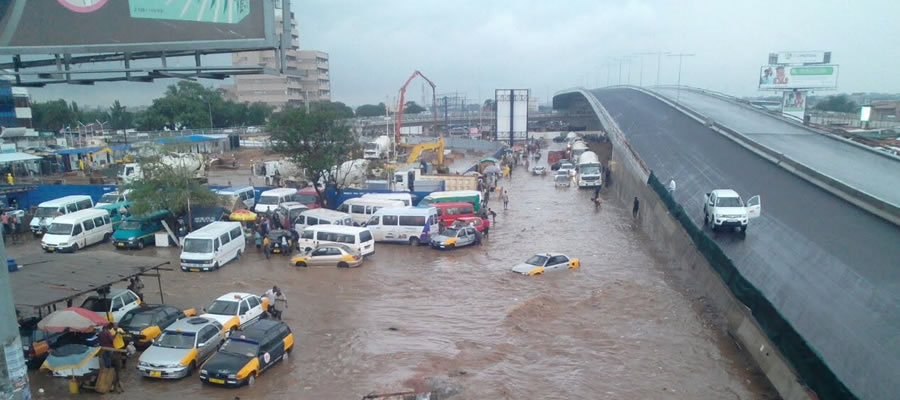
Dark clouds are no longer smiled at in Accra these days. Once welcomed for their promise of cooling relief from the city’s notorious heat and for settling the dust stirred up by massive—and often abandoned—road construction projects, they now evoke fear and frustration. Many residents find themselves praying for the sun to shine relentlessly, no matter how oppressive the heat becomes.
Accra has long been known for its episodic flooding, with the rainy season traditionally bringing the worst of it. For years, the havoc was largely confined to identifiable hotspots—areas like Circle, Adabraka, and parts of Dansoman. But this year’s floods have expanded their reach dramatically, recruiting communities and localities that had never before experienced such devastation.
Newly affected areas: No one is spared
Areas once considered safe have not been spared a bitter dose of what our collective actions and inactions toward the environment have wrought. Residents across the capital now find themselves forced into self-inflicted vigils, unable to sleep through the night.
The reason is simple and terrifying: a moment of slumber, and you may wake up floating in your own room, with your belongings scattered and soaked beyond salvage.
The reason is simple and terrifying: a moment of slumber, and you may wake up floating in your own room, with your belongings scattered and soaked beyond salvage.
The situation is grim, to say the least. Lives have been lost. Livelihoods that took decades to build have been swept away in hours. Properties—furniture, electronics, documents, vehicles—have been completely destroyed. Entire households have seen their savings vanish in muddy water.
The human cost: Starting from scratch
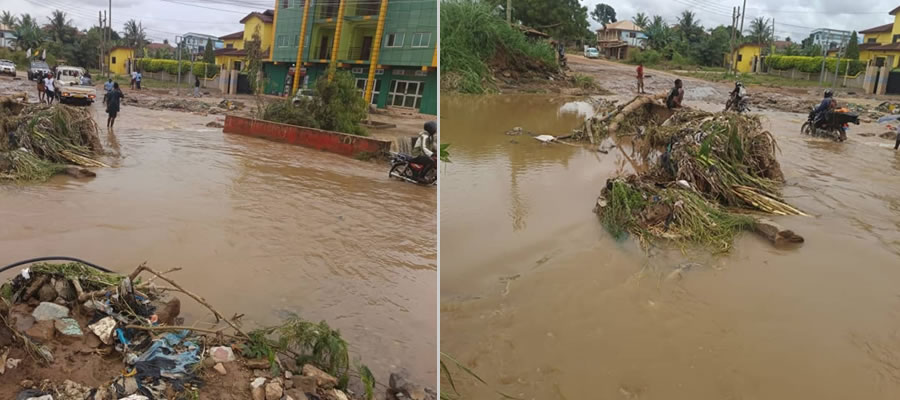
Many families will have to begin again, building their lives from scratch. The painful reality, however, is that some may never recover from this devastation. In Ghana, where insurance for personal effects remains virtually nonexistent for the average citizen, it is safe to say there is little to no hope of regaining what has been lost. The result? Thousands of residents rendered homeless. Houses have become uninhabitable, cloaked in thick layers of silt and sewage. Buildings have collapsed under the force of the floods. Roads and walkways are submerged, turning the city into a treacherous maze.
Why is this happening? Beyond the rain
It is true that this year’s rainfall has been unusually intense—a mere thirty-minute downpour can produce a serious deluge. But is that alone enough to explain the scale of destruction we are witnessing? Certainly not. There are deeper, man-made factors at play.
Chief among them is indiscipline on the part of the citizenry. Across Accra, water channels and storm drains have been blocked with construction waste, plastic rubbish, and abandoned vehicles. Many have erected unauthorized structures directly in drainage paths, narrowing—or in worse cases, completely truncating—the natural passage of water. Others have built perilously close to riverbanks, ignoring decades of planning regulations. The result is a city that cannot breathe when the heavens open.
Authorities react: Bulldozers in the rain
Under immense pressure, city authorities across the metropolitan, municipal, and district assemblies (MMDAs) have been forced to act—sometimes even while the rain was still falling. Heavy-duty earth-moving machines were deployed to various locations to identify trouble spots and restore some sanity in an effort to curtail the rising floods.
In communities like Christian Village in the Ga East Municipality, buildings erected on waterways were pulled down—dragged aside by bulldozers in full view of weeping residents—just to allow water to flow freely. Similar scenes played out in many other MMDAs, including Ayawaso, Okaikwei, and Ablekuma. While necessary, these demolitions have added another layer of anguish to an already traumatised population.
Law enforcement: Will the rules finally be enforced?
Despite years of public education and repeated warnings from the Hydrological Services Department and the National Disaster Management Organization (NADMO), enforcement of environmental and planning laws has remained weak and inconsistent.
However, the scale of this year’s disaster has prompted a sterner posture. The Accra Metropolitan Assembly (AMA) has announced a renewed crackdown on illegal structures, and police have begun arresting individuals caught dumping waste into drains. Task forces have been deployed to monitor high-risk zones, and several property owners have received eviction notices. Yet skeptics question whether these efforts will last beyond the current crisis, or whether Accra will simply return to business as usual once the rains subside.
However, the scale of this year’s disaster has prompted a sterner posture. The Accra Metropolitan Assembly (AMA) has announced a renewed crackdown on illegal structures, and police have begun arresting individuals caught dumping waste into drains. Task forces have been deployed to monitor high-risk zones, and several property owners have received eviction notices. Yet skeptics question whether these efforts will last beyond the current crisis, or whether Accra will simply return to business as usual once the rains subside.
How safe are the days ahead?
Meteorological forecasts offer little comfort. The rainy season is far from over, and experts predict more intense downpours in the coming weeks. With drainage systems still heavily compromised and behavioural change among residents happening far too slowly, the city remains dangerously vulnerable. Emergency services are stretched thin, and many affected communities have received little to no government aid. As climate change intensifies rainfall patterns across West Africa, Accra stands at a crossroads. Without a radical shift—in infrastructure planning, law enforcement, and public attitude—the dark clouds will continue to bring not relief, but ruin.
For now, residents can only watch the sky and wait. And pray.
For now, residents can only watch the sky and wait. And pray.
Other Stories



GoG Portal
Local Gov Ministry
Int of Local Gov Studies
Ministry of Information
Local Gov Service
Ghana MPs
Ghana Hospitals
NALAG
Local Gov Ministry
Int of Local Gov Studies
Ministry of Information
Local Gov Service
Ghana MPs
Ghana Hospitals
NALAG
 facebook
 X
X
 Youtube
 instagram
 whatsapp
 +233 593 831 280
+233 20 230 9497
+233 593 831 280
+233 20 230 9497 0800 430 430
 GPS: GE-231-4383
 info@ghanadistricts.com
 Box GP1044, Accra, Ghana