- Item


GENERAL
Tale of Two Standards: Minority Demands AG Publish Records on Yamin, Abanga After Wontumi Conviction
The Parliamentary Minority Caucus has condemned the conviction and 20-year prison sentence handed down to New Patriotic Party (NPP) Ashanti Regional Chairman Bernard Antwi-Boasiako, popularly known as Chairman Wontumi, describing him as a "political prisoner" and announcing plans for a legal and political challenge.
Date Created : 7/21/2026 : Story Author : Ghanadistricts.com
In a statement signed by Minority Leader Alexander Afenyo-Markin on July 20, 2026, the Caucus responded to the High Court judgment that found Wontumi and his company, Akonta Mining Limited, guilty on two counts each under the Minerals and Mining Act, 2006 (Act 703), as amended. Justice Audrey Kocuvie-Tay imposed two concurrent 20-year prison terms on Wontumi and fined the company 15,000 penalty units per count.
While expressing solidarity with Wontumi's family and the NPP, the Minority stressed that its concerns were institutional rather than personal, affirming that it holds the judiciary "in the highest constitutional regard". The Caucus stated it speaks "as custodians of a constitutional order that must apply equally to every Ghanaian, regardless of political colour". It also flagged "serious reservations" about the trial court's decision to pierce Akonta Mining's corporate veil and hold Wontumi personally liable, describing the move as "an exceptional remedy, not a routine one".
The Minority's central legal grievance centers on the delivery of judgment in the absence of Wontumi's lead counsel, whose office had reportedly notified the court in advance of a pre-existing professional engagement outside the jurisdiction. The Caucus argued this raises "grave questions" under Article 19(2)(g) of the Constitution, which guarantees every accused person the right to counsel of their own choice. Drawing a pointed parallel to the trial of former GNPC boss Tsatsu Tsikata—whose 2003 conviction was later overturned by the Court of Appeal in 2016 for occasioning a miscarriage of justice—the Minority declared: "If the right to counsel of choice mattered in 2003, it matters in 2026, and it matters exactly as much when the accused sits on the other side of the political aisle".
The Caucus's second major challenge concerns Justice Kocuvie-Tay's refusal to refer constitutional questions raised by the defence to the Supreme Court under Article 130. The Minority argued that by ruling for herself that Section 99(2)(b) of Act 703 was "clear and unambiguous," the trial judge assumed a jurisdiction the Constitution reserves exclusively for the apex court. It cited the Supreme Court's 2016 ruling in Republic v. The High Court, General Jurisdiction 6, Accra; Ex Parte Dr. Zenator A. Rawlings, which quashed a High Court ruling for wrongfully assuming jurisdiction to interpret a constitutional provision. The Minority described this as "a jurisdictional defect capable of vitiating the entire proceeding".
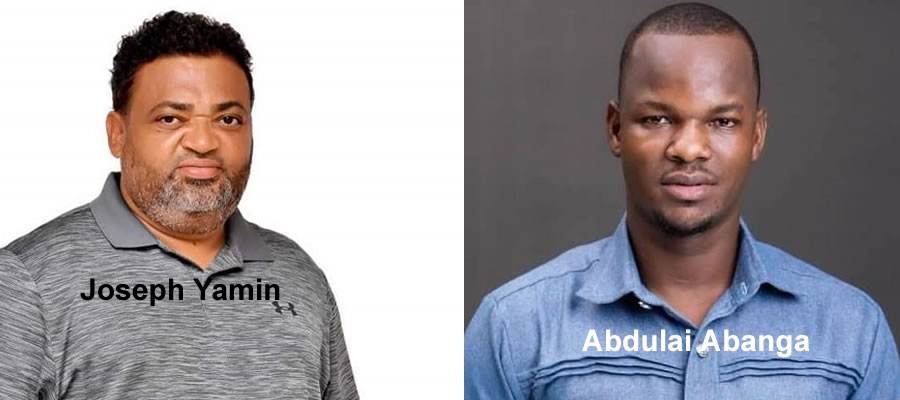
The statement's sharpest political charge accused the government of selective justice, pointing to stalled investigations into ruling party officials even as Wontumi begins serving his sentence. The Caucus noted that on July 15, 2025, Attorney-General Dr. Dominic Akuritinga Ayine directed EOCO to investigate NDC National Organiser Joseph Yamin and National Vice Chairman Yakubu Abanga over illegal mining allegations—yet a year later, "the public has been offered no comparable update on charges, arraignment or trial dates for either gentleman". It also cited an unprosecuted case involving an MP from Prestea Huni Valley linked to a reported takeover of a licensed mining concession. "A government that is serious about ending selective justice must be prepared to prosecute its own with the same vigour it has shown here," the statement read.
The Minority called on the Attorney-General to publish its enforcement record on illegal mining across the political spectrum and urged the Court of Appeal to give rigorous consideration to any appeal raising fair trial concerns. It also asked the Judiciary to reaffirm the modest threshold for constitutional referral under Article 130, "so that trial courts do not inadvertently narrow citizens' access to the Supreme Court".
Concluding, the Minority urged all Ghanaians to insist on consistency: "that the standard applied to one mining concession be applied to all; that the standard applied to one political actor be applied to all; and that the standard which cleared Mr. Tsatsu Tsikata's name in 2016, after his trial was found to have occasioned a miscarriage of justice, be demanded, with equal conviction, today". The Caucus reaffirmed its commitment to pursue every lawful and constitutional avenue to ensure justice is done.
Other Stories


GoG Portal
Local Gov Ministry
Int of Local Gov Studies
Ministry of Information
Local Gov Service
Ghana MPs
Ghana Hospitals
NALAG
Local Gov Ministry
Int of Local Gov Studies
Ministry of Information
Local Gov Service
Ghana MPs
Ghana Hospitals
NALAG
 facebook
 X
X
 Youtube
 instagram
 whatsapp
 +233 593 831 280
+233 20 230 9497
+233 593 831 280
+233 20 230 9497 0800 430 430
 GPS: GE-231-4383
 info@ghanadistricts.com
 Box GP1044, Accra, Ghana