- Item



PHYSICAL AND NATURAL ENVIRONMENT
LOCATION AND SIZE
The district is located within longitudes 0°35’W and 1°45’W and Latitude 9°55’N and 10°35’N . It shares boundaries with six districts as follows; North Gonja District in the Savanna Region to the South, Kunbungu District in the Northern Region also to the south, Sisala East in the Upper West Region to the North-West, Wa East in the Upper West Region to the South-West, Builsa South in the Upper East Region to the North and West Mamprusi District to the East. It has a total land size of 2,121.31 sq kilometers. The location of the district positioned it to benefit from essential service centers in the Five Northern Regions. This does not only provide relief for the woefully inadequate socioeconomic infrastructure in the district but also provides options for the inhabitants of the district to access some essential services which may be lacked in the district but can be found in either the surrounding districts or the regional capitals of the five regions.
The district lies within the savannah climatic belt with single maxima rainfall regime. Average annual rainfall is between 1000mm and 1400mm.The rains occur between May and October. July to September is normally the peak period. Floods occur during the peak period after which there is a prolonged dry season from November to April. Temperatures are generally high all year round with the hottest month being March. Average Monthly Temperature is between 25.50oC and 36 oC. In the rainy season, there is high humidity and sunshine with heavy thunder storms. The dry season is characterized by dry harmattan winds from November to February and high sunshine from March to May.
The natural vegetation is classified as Guinea Savannah Woodland, composed of short trees of varying sizes and density, growing over a dispersed cover of perennial grasses and shrubs. Among these threes are shear trees which provide the opportunity for Shea butter extraction in the district. It is worth noting that wood is the main fuel used in the district, accounting for 92.1 percent of fuel used (PHC, 2021. This is followed by charcoal (6.3%). This has far reaching implications for the forest and the environment as fuel wood and charcoal are all drawn from the forest stock. The situation is exacerbated by the emerging increasing craze for hard wood which is mainly meant for export. Hardwood is mainly harvested from the already small isolated fragmented forest areas within the district. This worrying development calls for appropriate strategies to help save the environment as the district is gradually losing its forest resources. This by extension may lead to the depletion of the biodiversity, climate change and other unwanted outcomes which has far reaching socio-economic implications for the poor and the disadvantaged especially peasant farmers within the district.
RELIEF AND DRAINAGE
The district geology is made up of Middle Voltain rocks normally suitable for rural water supply. It is largely covered by a flat and undulating terrain. The most significant river in the district is the White Volta and its tributaries include Sissili and the Kulpawn rivers. Along the valleys of these rivers are large arable lands, good for the cultivation of rice and other cereals.
SOILS Soils
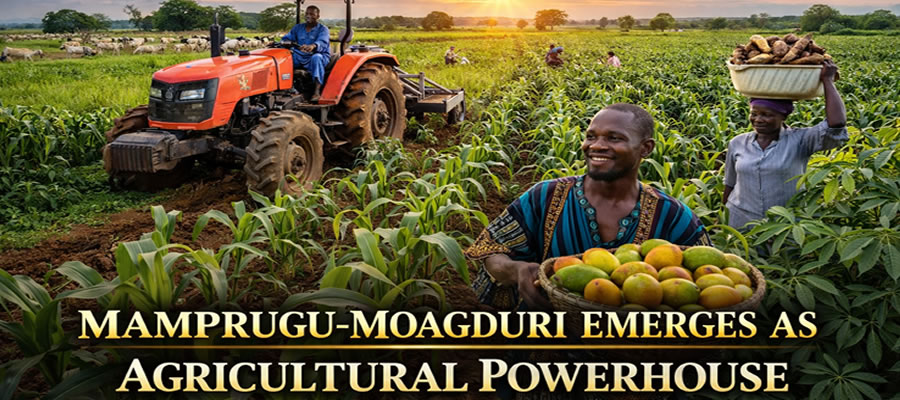
In the district are developed under the Savannah vegetation. The soils are quite rich in nutrients especially along the valleys. Alluvial soils are quite extensive around the valleys which are also suitable for rice production. The soils in the district support the cultivation of a variety of crops including maize, yam, millet, groundnut, cowpea, beans and vegetables. There is however, considerable soil erosion in the District due to bad farming practices and rampant burning of the bush.
WATER SECURITY
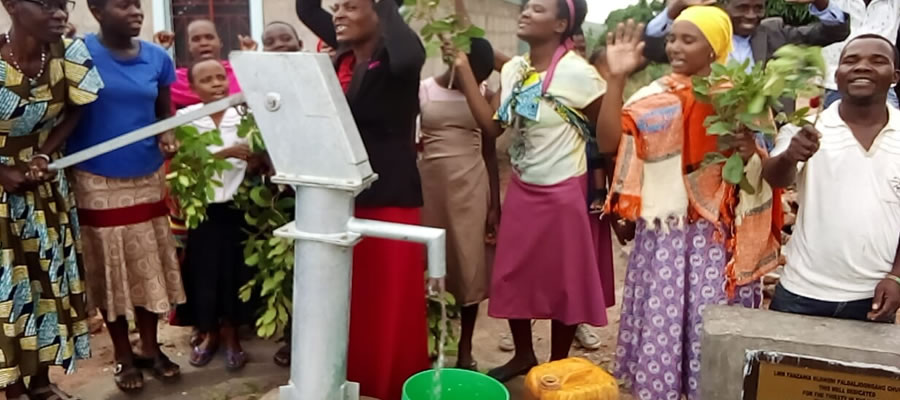
The United Nations Water (UN-Water) defines water security as the capacity of a population to safeguard sustainable access to adequate quantities of and acceptable quality water for sustaining livelihoods, human well-being, and socioeconomic development, for ensuring protection against water-borne pollution and water related disasters and for preserving ecosystems. In the light of the above definition, the continues reliance on unsafe sources of water such as dams and dug outs by some communities in the district for drinking and other domestic choirs poses WATER SECURITY The United Nations Water (UN-Water) defines water security as the capacity of a population to safeguard sustainable access to adequate quantities of and acceptable quality water for sustaining livelihoods, human well-being, and socioeconomic development, for ensuring protection against water-borne pollution and water related disasters and for preserving ecosystems. In the light of the above definition, the continues reliance on unsafe sources of water such as dams and dug outs by some communities in the district for drinking and other domestic choirs poses
NATURAL AND MANMADE DISASTERS
Disasters can take many different forms and can be caused by the activities of man or natural factors. Disasters can have devastating effect on lives and property. Natural disasters can be manifested in various forms including agricultural diseases and pest’s infestation, damaging winds and drought, wild fires, floods as well as flash floods. On the other hand, disasters caused by human activities such as pollution of water bodies with chemicals has significant effect on communities. It is worth mentioning for policy emphasis that flood prone communities most of them along the river valleys have been mapped out for disaster risk assessment to ensure effective and efficient response measures. Further, effective community engagement strategy should be designed to deliver behavioral change communication to ensure disaster prevention. Fig 1.2 provides information on flood risk areas in the district.
Date Created : 2/5/2026 6:29:35 AM


Local Gov Ministry
Int of Local Gov Studies
Ministry of Information
Local Gov Service
Ghana MPs
Ghana Hospitals
NALAG
 facebook
 X
X
 Youtube
 instagram
 whatsapp
 +233 593 831 280
+233 20 230 9497
+233 593 831 280
+233 20 230 9497 0800 430 430
 GPS: GE-231-4383
 info@ghanadistricts.com
 Box GP1044, Accra, Ghana