- Item


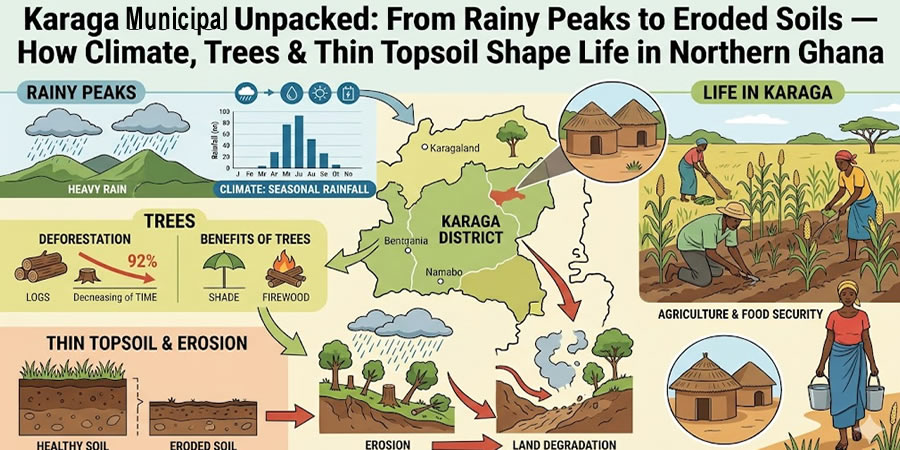
Karaga Municipal Unpacked: From Rainy Peaks to Eroded Soils — How Climate, Trees & Thin Topsoil Shape Life in Northern Ghana
Date Created : 5/14/2026 5:44:10 AM : Story Author : Ernestina Mensah/Ghanadistricts.com
With its predictable rainy season, scorching dry months, iconic shea-dotted grasslands, and fragile soils shaped by centuries of fire and rain, Karaga’s environment defines how people farm, earn, build, and survive.
And now, as climate pressures mount and land use intensifies, understanding this delicate balance has never been more urgent.
Let’s break down what makes Karaga’s natural systems tick — and why it matters for food security, rural livelihoods, and future development planning.
Climate Snapshot: Heat, Rhythm, and Rainfall Reality
Rainy season: May–October — intense, concentrated, and critical
Peak rains: August & September (up to 200mm/hour at onset!)
Dry season: November–April — dominated by the dusty, cool harmattan, with lows in Nov–Feb
Temperatures: Blistering highs of 36°C+ in March–April, moderating during harmattan
Annual rainfall: 900–1000mm
Why it matters: That short, heavy window means farmers must plant fast — and soil must absorb water immediately. When it doesn’t? Runoff, erosion, and failed crops follow.
Vegetation: The “Green Gold” of the Guinea Savannah
Karaga’s landscape is classic Guinea savannah: tall grasses swaying between drought-resistant trees — most notably:
Shea trees (Vitellaria paradoxa) — source of shea butter, women’s income, and global demand
Dawadawa (Parkia biglobosa) — protein-rich pods used in soups, livestock feed, and traditional medicine
Bonus uses:
Grasses = roofing thatch, weaving, crafts, livestock fodder
Trees = shade, windbreaks, carbon sinks, cultural anchors
Economic truth: These aren’t just trees — they’re bank accounts growing on the ground, especially for women-led enterprises.
Soil Story
Where Fertility Fights Back — and Often Loses and this is where Karaga’s environmental challenge deepens:
Geology:
Entirely within the Voltaian Sandstone Basin, with layers of sandstone, shale, siltstone, and minor limestone.
Dominant soils:
Savannah Ochrosols — moderately fertile, but thin
Groundwater Laterites — acidic, low-nutrient, gravel-rich, great for roads, terrible for roots
Tiny patches of Lithosols & Brunosols — very shallow, rocky, and marginal
The Erosion Crisis:
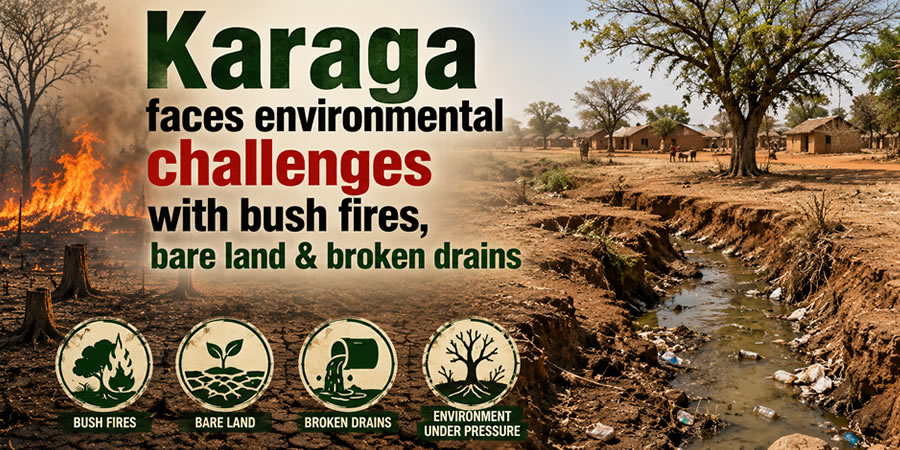
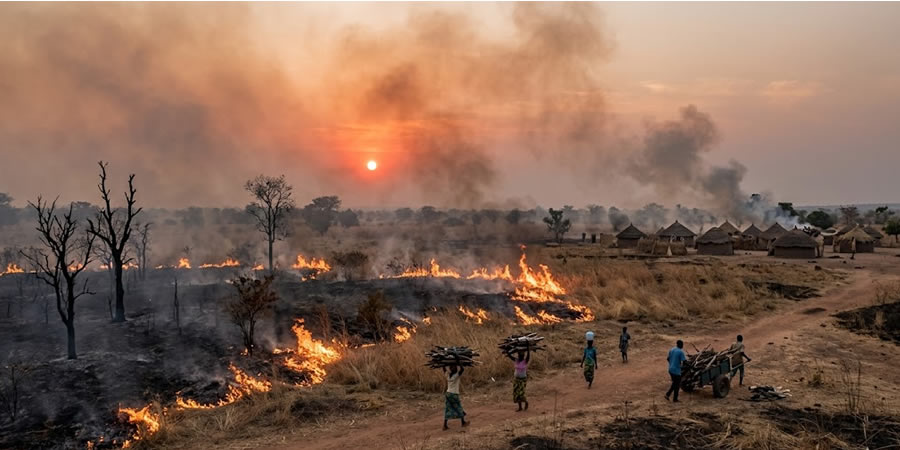
Annual bushfires + bare soil exposure ? sheet erosion (widespread surface loss) + gully erosion (deep, destructive channels)
Result: Topsoil stripped away, organic matter destroyed, soil fauna silenced, compaction worsened
Consequence: Poor infiltration, runoff instead of recharge, stunted root growth, lower yields — even with good rain
Other stories

Local Gov Ministry
Int of Local Gov Studies
Ministry of Information
Local Gov Service
Ghana MPs
Ghana Hospitals
NALAG
 facebook
 X
X
 Youtube
 instagram
 whatsapp
 +233 593 831 280
+233 20 230 9497
+233 593 831 280
+233 20 230 9497 0800 430 430
 GPS: GE-231-4383
 info@ghanadistricts.com
 Box GP1044, Accra, Ghana