- Item


93.3% of Karaga's Workforce Feeds the Nation: Inside the Municipality's Industry Landscape
Date Created : 5/18/2026 5:17:21 AM : Story Author : Ernestina Mensah/Ghanadistricts.com
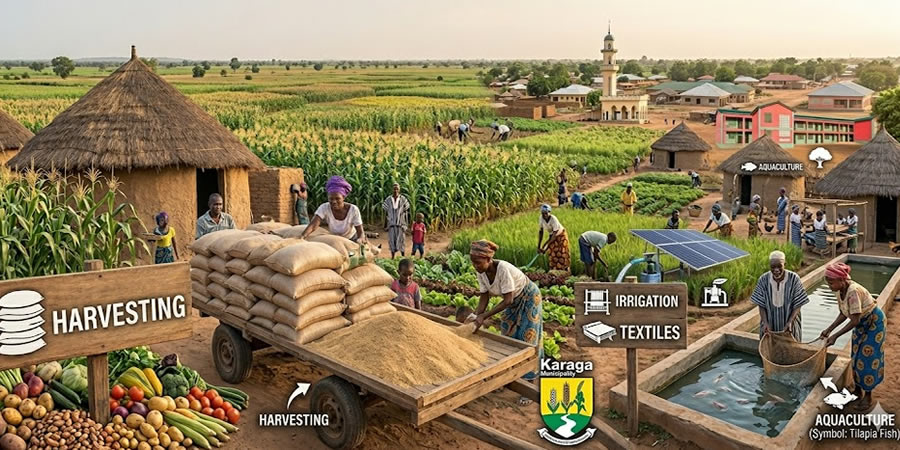
In Karaga District, the economy does not rise from factory chimneys or office towers. It rises from the soil, from the shea tree, from the hands of farmers who wake before dawn to tend their fields. According to the latest industry statistics, an overwhelming ninety-three point three percent of Karaga's economically active population aged fifteen years and older is employed in agriculture, including forestry and fishing. This is not just a statistic — it is the story of a district where the land is the employer, the bank, and the future.
Agriculture: The Backbone That Employs Nearly Everyone
Agriculture dominates Karaga's economy like no other sector. With ninety-three point three percent of workers engaged in farming, forestry, or fishing, the district is essentially a nation of food producers. The total number of people employed in this sector stands at thirty-nine thousand eight hundred and eighty-eight individuals out of a total economically active population of forty-two thousand seven hundred and sixty-two.
The implications are enormous. When the rains come on time, Karaga thrives but when drought or pests strike, the entire district feels the pain. This heavy dependence on agriculture means that investments in irrigation, storage facilities, shea processing, and farm extension services are not optional — they are essential lifelines for the vast majority of households.
Trade and Repairs: The Second Pillar
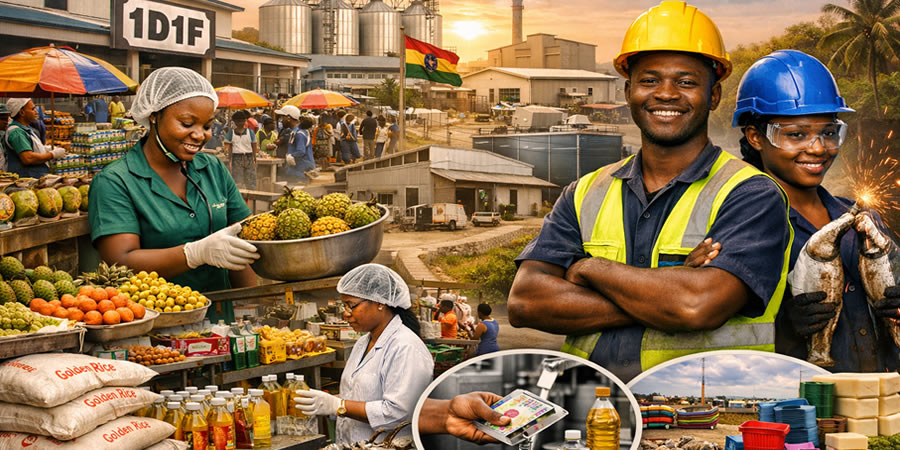
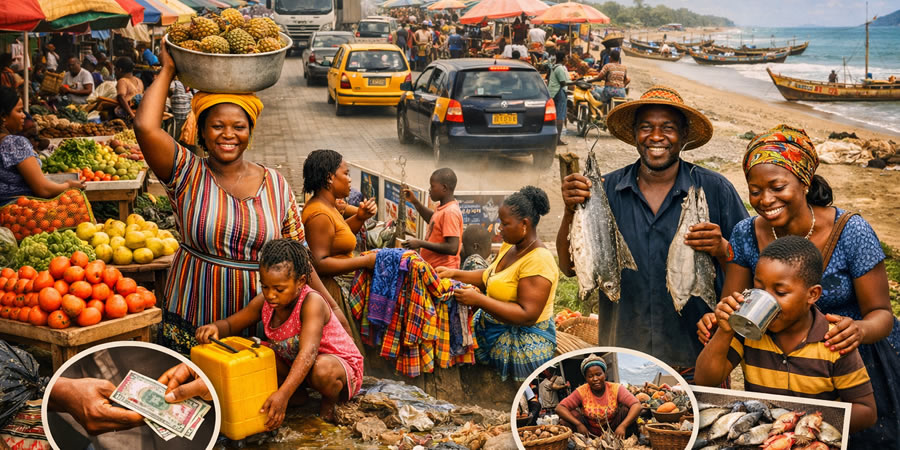
After agriculture, the next largest industrial activity is wholesale and retail trade, including the repair of motor vehicles and motorcycles, which employs two point two percent of the workforce, representing nine hundred and thirty-one people. These are the shopkeepers, market vendors, spare parts dealers, and mechanics who keep Karaga's local economy moving. While the number is small compared to agriculture, this sector plays a critical role in connecting farmers to markets and ensuring that goods and services flow through the district's one hundred and sixty-seven communities.
Manufacturing: Small but Significant
Manufacturing accounts for one point nine percent of employment, with eight hundred and thirteen workers engaged in processing and production activities. In Karaga, manufacturing is closely tied to agriculture — think shea butter processing, cassava grinding, grain milling, and traditional crafts. These small-scale enterprises add value to farm produce and create income opportunities, particularly for women who dominate the shea value chain.
Other Sectors: Tiny but Telling
The remaining industries in Karaga employ only insignificant proportions of the economically active population, but they are worth noting for the picture they paint. Mining and quarrying, electricity, gas, steam and air conditioning supply, water supply, sewerage, waste management and remediation activities, financial and insurance activities, real estate activities, and activities of extraterritorial organizations and bodies each account for less than one percent of employment. The total number of workers across all these sectors combined stands at just under one thousand one hundred and thirty people.
This tells us that Karaga remains a predominantly traditional economy — one where formal sector employment, banking, utilities, and real estate have yet to take root in a meaningful way. The opportunity, however, lies in diversification: as education levels rise and infrastructure improves, these sectors hold the potential to grow and provide alternative livelihoods for a young, expanding population.
Why This Matters for Karaga's Future
The numbers are clear. Karaga's economy is almost entirely agricultural, and that brings both strength and vulnerability. The strength lies in the district's ability to feed itself and contribute to Ghana's food basket. The vulnerability lies in the lack of diversification, which leaves households exposed to climate shocks, market fluctuations, and seasonal hunger.
Other stories

Local Gov Ministry
Int of Local Gov Studies
Ministry of Information
Local Gov Service
Ghana MPs
Ghana Hospitals
NALAG
 facebook
 X
X
 Youtube
 instagram
 whatsapp
 +233 593 831 280
+233 20 230 9497
+233 593 831 280
+233 20 230 9497 0800 430 430
 GPS: GE-231-4383
 info@ghanadistricts.com
 Box GP1044, Accra, Ghana