- Item


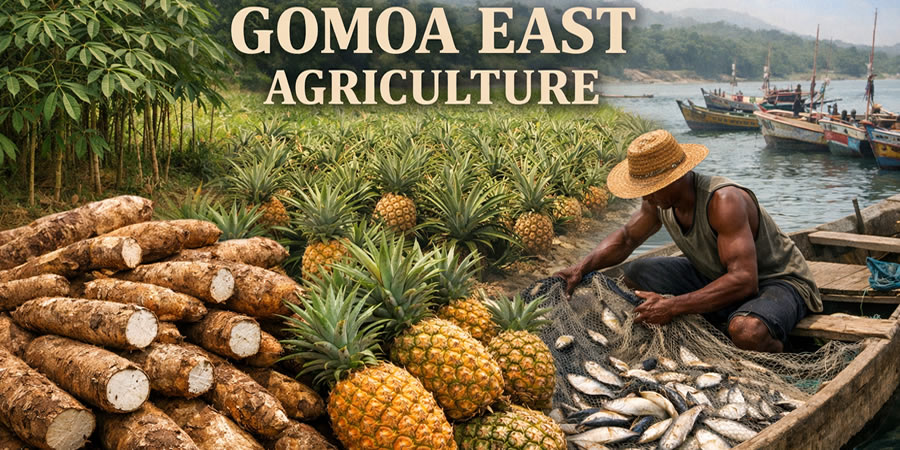
Cassava, Pineapple & Fish: Inside Gomoa East's Booming Agricultural Economy
Date Created : 6/9/2026 12:23:32 AM : Story Author : Ernestina Mensah/Ghanadistricts.com
Where the Land Meets the Sea
In Gomoa East Municipality, agriculture is not just an economic activity — it is the lifeblood of the people.
Over sixty percent of the total labour force is employed in the agricultural sector, and the total agricultural land spans an estimated one hundred and sixty-nine point two-five square kilometres.
From the cassava fields that stretch across the interior to the fishing canoes that dot the coast, Gomoa East's economy rises from the soil and the sea.
Crops: A Rich and Diverse Basket
The ecology of Gomoa East is generous. The land encourages the cultivation of crops such as cassava, maize, sugar cane, pineapple, rice, pawpaw, vegetables, citrus, yam, and plantain.
This natural advantage has given rise to the cultivation of non-traditional crops that are finding their way into both local markets and export channels.
These include Asian vegetables, chilli pepper, bird eye pepper, and pineapple — crops that command premium prices and open new income streams for enterprising farmers.
Cassava remains the king crop, serving as both a staple food for households and a raw material for processing into gari, flour, and animal feed. Maize follows closely behind, while pineapple has emerged as a high-value cash crop with growing demand from urban centres and fruit processing companies.
Fishing: 11,000 People Depend on the Sea
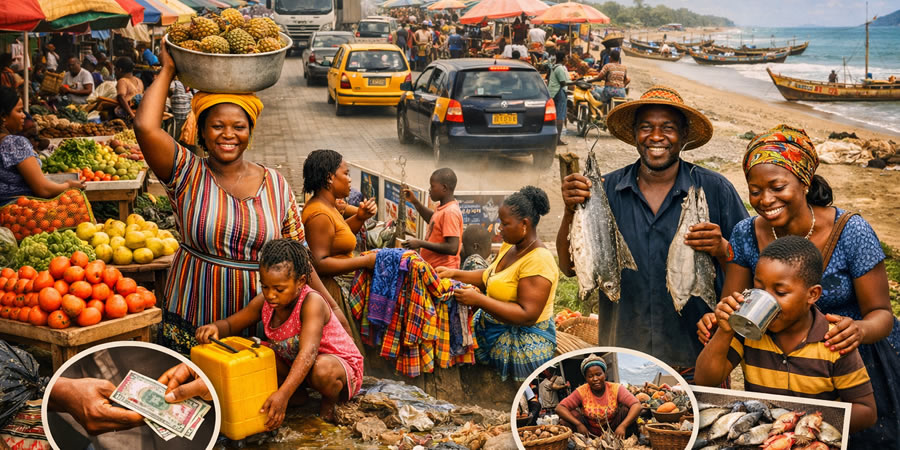
Gomoa East's coastal location gives it a significant marine fishing sector that employs approximately eight thousand men and three thousand women. While men typically go out to sea in canoes, women dominate the fish processing and marketing value chain — smoking, frying, and selling the catch at local markets.
In addition to marine fishing, there are a few small-scale aquaculture operations in areas around Okyereko and Adzintem, where farmers raise fish in ponds for local consumption and sale. While still modest in scale, aquaculture holds significant potential for expansion, particularly as pressure on marine stocks continues to grow.
Poultry: A Rising Star
Poultry production is described as one of the glowing agricultural sectors in the Municipality, employing about two percent of the working force. While this percentage may seem small, the poultry industry is growing rapidly, driven by rising demand for eggs and meat in nearby urban markets. Small-scale farmers keep indigenous and improved breeds, with many women playing a leading role in this subsector.
Who Farms? The Labour Story
Generally, farming in the Municipality employs about twelve thousand and seventy-five people, of which sixty percent are males and forty percent are females. This means that more men are employed in the agricultural sector than their female counterparts.
However, this statistic does not capture the full picture — women are heavily involved
Other stories





Local Gov Ministry
Int of Local Gov Studies
Ministry of Information
Local Gov Service
Ghana MPs
Ghana Hospitals
NALAG
 facebook
 X
X
 Youtube
 instagram
 whatsapp
 +233 593 831 280
+233 20 230 9497
+233 593 831 280
+233 20 230 9497 0800 430 430
 GPS: GE-231-4383
 info@ghanadistricts.com
 Box GP1044, Accra, Ghana