- Item

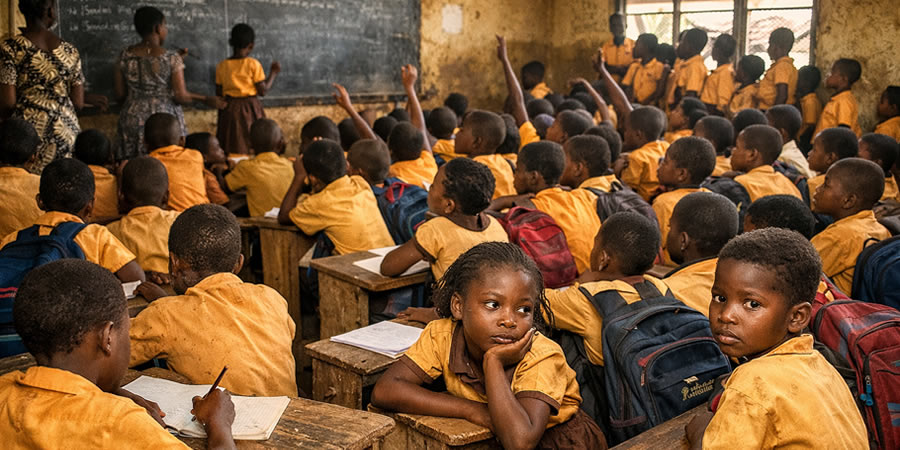
The Overcrowding Crisis Inside Gomoa East's Public Schools
Date Created : 6/9/2026 7:59:46 AM : Story Author : Ernestina Mensah/Ghanadistricts.com
A Tale of Two Educational Experiences
In Gomoa East Municipality, a child's educational experience depends heavily on where they are born. A child born in the southern parts of the Municipality — around Nyanyano and Ojobi/Akotsi — has access to a higher concentration of schools, more educational resources, and relatively better facilities.
But a child born in the northern areas, particularly the Dominase Area Council faces a very different reality — fewer schools, longer travel distances, and aging infrastructure that is crying out for renovation.
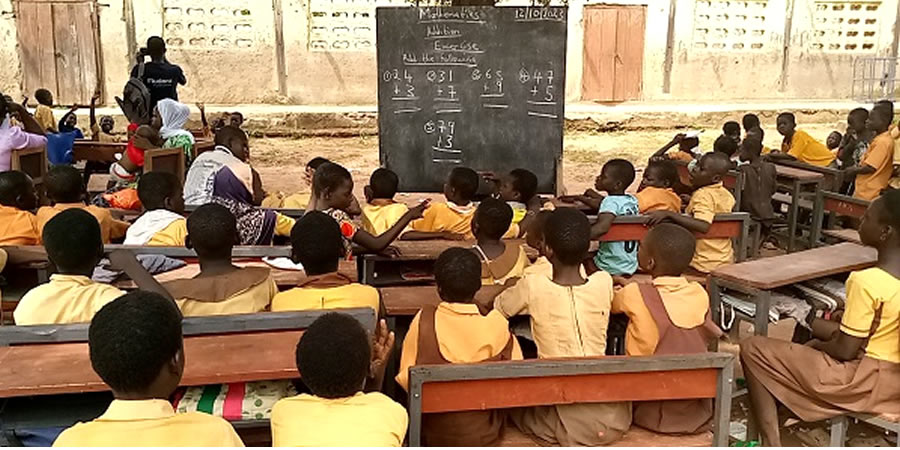
This geographic imbalance is just one of the challenges facing education in Gomoa East. The Municipality also grapples with severe overcrowding in public schools, a significant shortage of trained teachers, and infrastructure that has not kept pace with population growth. Here is the full picture, drawn from the Municipality’s own data.
School Infrastructure: 192 Schools, Unevenly Distributed
Public and Private Schools in the Municipality, Gomoa East has a total of one hundred and ninety-two (192) schools spanning from crèche/nursery to Senior High School. Here is the breakdown:

Sixty-six percent (66%) of all schools in Gomoa East are public, while thirty-four percent (34%) are private. The private sector is most active at the crèche/nursery level, where a striking 88.9% of schools are privately owned. This suggests that early childhood education demand is rising faster than the public system can meet it, leaving private operators to fill the gap.
However, these numbers do not tell the full story of where these schools are located. The southern area councils of Nyanyano and Ojobi/Akotsi command the highest concentration of educational facilities. Meanwhile, the Northern Dominase Area Council has significantly fewer schools, forcing children in those communities to travel longer distances or forego
Other stories


Local Gov Ministry
Int of Local Gov Studies
Ministry of Information
Local Gov Service
Ghana MPs
Ghana Hospitals
NALAG
 facebook
 X
X
 Youtube
 instagram
 whatsapp
 +233 593 831 280
+233 20 230 9497
+233 593 831 280
+233 20 230 9497 0800 430 430
 GPS: GE-231-4383
 info@ghanadistricts.com
 Box GP1044, Accra, Ghana