- Item


SOCIAL
Youth Unemployment Crisis Deepens as Nearly 2 Million Ghanaians Neither Working Nor Learning – Kojo Oppong Nkrumah
Nearly one in every two young people in Greater Accra is unemployed, as the country’s youth unemployment crisis worsens despite government interventions, Parliament has heard.
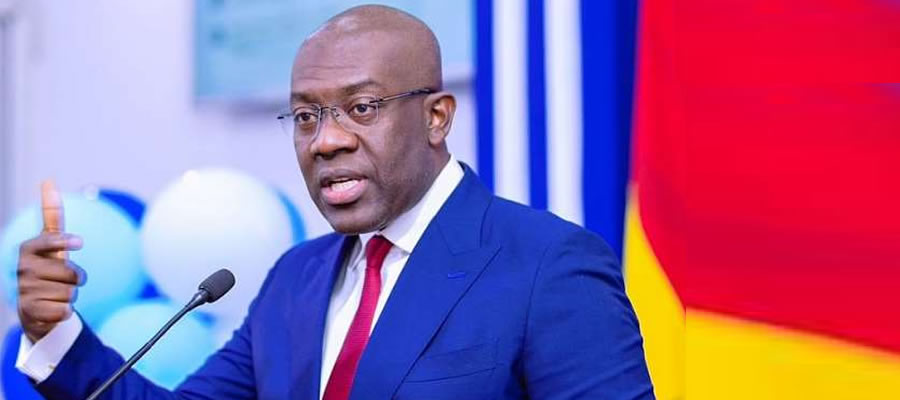
Date Created : 6/11/2026 : Story Author : Dominic shirimori/Ghanadistricts.com
Delivering a statement on rising youth unemployment, Kojo Oppong Nkrumah, MP for Ofoase-Ayirebi, cited data from the Ghana Statistical Service showing that unemployment among those aged 15 to 24 rose from 32 percent in December 2024 to 32.5 percent by the third quarter of 2025. In Greater Accra, the rate hit 49.3 percent.
The MP told Parliament that seven out of every ten unemployed Ghanaians are under 35. According to the Ghana Statistical Service, 1.34 million young people aged 15 to 24 are not in education, employment, or training. When the National Youth Policy definition extending to age 35 is applied, the figure rises to 1.95 million.
“Nearly two million young Ghanaians are neither earning nor learning,” Oppong Nkrumah said. “The unemployment problem in this country is not a general problem with a youth dimension. It is a youth problem, and the burden is getting worse.”
He acknowledged that no government, including the previous New Patriotic Party administration, has fully solved the issue. However, he raised concerns about the effectiveness of current flagship programmes such as the 24-Hour Economy, the One Million Coders Programme, and the Adwumawura Programme.
The MP noted that while the One Million Coders Programme received over 90,000 applications in 48 hours, its website was offline by November 2025 before being relaunched. On Adwumawura, only 475 entrepreneurs had received grants by March 2026, against an annual target of 10,000 businesses. He also recalled a Ghana Armed Forces recruitment exercise in November 2025 where 21,000 young people converged for just 2,000 slots, resulting in a stampede that killed six and left five in intensive care.
Oppong Nkrumah called for a new job creation strategy anchored on published delivery scorecards, separating skills training from job creation, shifting to private capital mobilisation, strengthening the apprenticeship economy, and building a credible Labour Market Information System. “Ghanaian youth do not want slogans,” he said. “They want feasible programmes that create dignified, productive, and well-paid jobs. The time to act is now.”
Dominic Shirimori/Ghanadistricts.com
Other Stories


GoG Portal
Local Gov Ministry
Int of Local Gov Studies
Ministry of Information
Local Gov Service
Ghana MPs
Ghana Hospitals
NALAG
Local Gov Ministry
Int of Local Gov Studies
Ministry of Information
Local Gov Service
Ghana MPs
Ghana Hospitals
NALAG
 facebook
 X
X
 Youtube
 instagram
 whatsapp
 +233 593 831 280
+233 20 230 9497
+233 593 831 280
+233 20 230 9497 0800 430 430
 GPS: GE-231-4383
 info@ghanadistricts.com
 Box GP1044, Accra, Ghana