- Item


GENERAL
TMA seeks stronger collaboration with GPHA on urban development issues
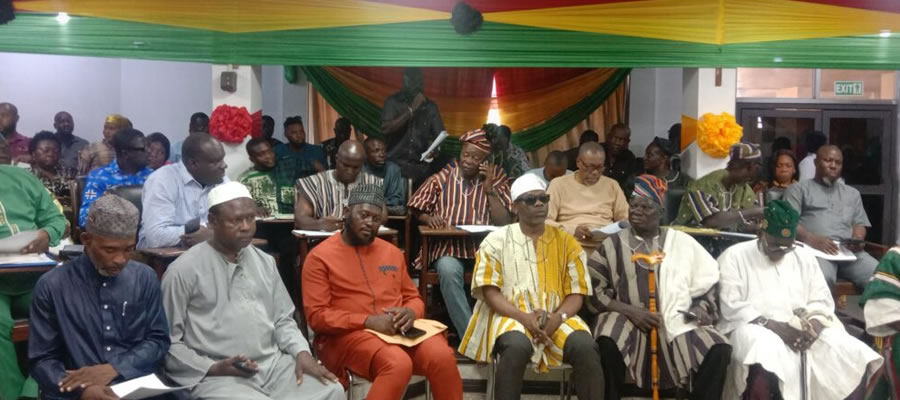
Date Created : 5/25/2026 : Story Author : Elizabeth Larkwor Baah/Ghanadistricts.com
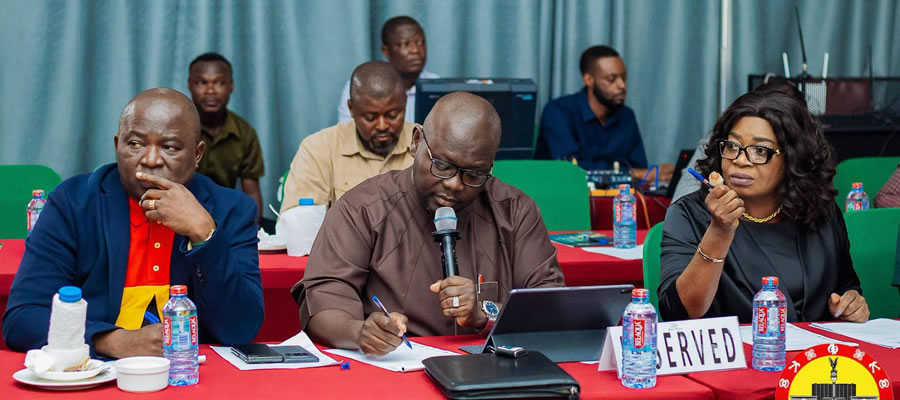
Ms Ebi Bright, Tema Metropolitan Chief Executive (MCE), made the call after GPHA officials appeared before the Assembly’s general meeting to respond to concerns over roads leading to the port, particularly the Harbour and Meridian roads.
She stressed that collaboration between the Assembly and GPHA must go beyond goodwill and focus on clearly defined responsibilities that protect the interests of Tema and its residents.
Speaking during the first ordinary session of the Assembly, Ms Bright noted that Tema continued to bear the social and infrastructural burden of the country’s expanding port activities, despite the Assembly having limited involvement in key decisions affecting the city.
She explained that the law grants the Assembly authority over planning and development within its jurisdiction, making it necessary for institutions operating in Tema to align their activities with the city’s broader development agenda.
Although she acknowledged GPHA’s operational autonomy within the port enclave, she noted that decisions taken within the port often had direct consequences on surrounding communities, especially in transportation, environmental management and public infrastructure.
Ms Bright identified the increasing number of trucks operating within the metropolis as a major challenge linked to port expansion, indicating that about 5,000 trucks move through Tema daily, placing enormous pressure on roads and other public facilities.
She further argued that Tema receives little direct financial benefit from hosting the country’s ports since GPHA revenues are paid to the central government, while the Assembly does not receive a dedicated share despite the strain on the city’s infrastructure.
The MCE therefore called for what she described as a “revolution” in the relationship between TMA and GPHA to ensure fairness, accountability and effective coordination in urban development.
She also expressed concern over Tema’s long-term planning system, saying many of the city’s original development plans were outdated and no longer reflected current realities.
Ms Bright emphasised the need for continuous dialogue between local authorities and national institutions operating within Tema to ensure sustainable development that benefits residents. She expressed hope that future engagements between the Assembly and GPHA would strengthen cooperation and clarify responsibilities in addressing the city’s urban challenges.
Meanwhile, Mr Kwamla Ofori, Engineering Manager at GPHA, explained that road construction and maintenance were not part of the authority’s direct mandate, although GPHA supported such projects as part of its corporate social responsibility initiatives.
He disclosed that GPHA had contributed to road repairs in several parts of the country, including the Western Region, and was currently planning to reconstruct the Tema Harbour Road despite it falling outside its formal responsibility.
Mr. Ofori added that pothole repair works had also been carried out, but maintaining roads continuously remained difficult because the authority’s primary focus was port operations.
On truck parking, he acknowledged that congestion caused by heavy-duty trucks remained a major challenge in Tema. He explained that although GPHA had provided truck parking facilities within its jurisdiction, the behaviour of truck drivers outside the port area was beyond the authority’s control.
He revealed that GPHA had acquired land near the Tema Oil Refinery for truck parking and planned to improve the site with pavement works. He added that attempts to establish additional truck parks near Ashaiman failed due to inadequate collaboration among stakeholders.
Mr Ofori called for stricter enforcement of truck parking regulations, including heavy fines for illegal parking, to encourage drivers to use designated parking spaces and reduce disruptions to residents and road users.
Other Stories




Local Gov Ministry
Int of Local Gov Studies
Ministry of Information
Local Gov Service
Ghana MPs
Ghana Hospitals
NALAG
 facebook
 X
X
 Youtube
 instagram
 whatsapp
 +233 593 831 280
+233 20 230 9497
+233 593 831 280
+233 20 230 9497 0800 430 430
 GPS: GE-231-4383
 info@ghanadistricts.com
 Box GP1044, Accra, Ghana