- Item

SOCIAL
Dialogue on women’s economic rights held in Bolgatanga
Date Created : 9/2/2025 : Story Author : Godfred Aaneamenga Polkuu/ghanadistricts.com
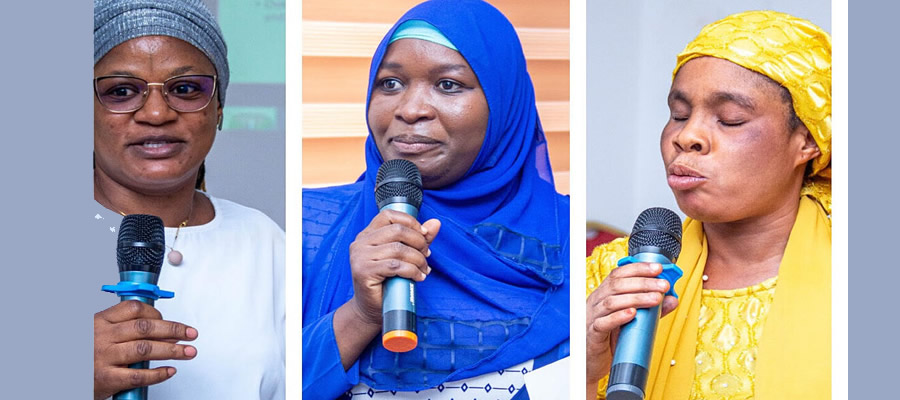
The dialogue was in collaboration with WILDAF West Africa Sub Regional Office (WASRO) and the Women in Agriculture Platform (WAP), with funding support from the African Women Development Fund (AWDF) under the “Economic Justice for Rural Women in West Africa” project.
The policy dialogue aimed to sensitize stakeholders including traditional and religious leaders, women farmers, Civil Society Organizations and state agencies such as the Ministry of Food and Agriculture on key provisions in Ghana’s legal framework, which promoted women’s economic rights.
It was also intended to facilitate critical reflections and review socio-cultural practices that undermined women’s rights and economic empowerment, as participants were taken through existing legal frameworks on their rights and the available protections under the law.
Madam Lois Aduamoah-Addo, the Programme Manager for WILDAF Ghana, in an interview with the Ghana News Agency (GNA) after the dialogue, said the NGO operated in the Nabdam and Bawku West Districts.
She said WILDAF Ghana observed several socio-cultural norms perpetrated against women in communities, and that such norms were inimical to their economic rights.
“So, with this dialogue, we have increased knowledge on access to justice mechanism that they can take advantage of.
We have also identified how they could work together as a holistic group in ensuring that they are able to advance the rights of women and girls in the districts,” she said.
Madam Aduamoah-Addo stressed the need for collaborative efforts among stakeholders to harness opportunities around cultural resources and economic development to create sustainable change for women in rural communities.
Mrs Georgina Aberesa-Ako, the Upper East Regional Director of the Department of Children, said socio-cultural norms continued to limit women’s access to critical resources including land, credit, education, and agricultural inputs across the communities.
She said the barriers did not only marginalize women farmers, who were the backbone of the agricultural economy, but slowed their collective progress.
He insisted that, “We must review and transform these entrenched practices through community-led dialogue, education, and leadership by our revered traditional rulers and opinion leaders.”
Mrs Aberesa-Ako urged participants to leave the dialogue with a renewed commitment to address gender inequalities not as isolated issues, but as national development priorities.
Mr Komla Morgan Lawe, a Lawyer, who took participants through laws that promoted women’s economic rights, said available statistics from the Ghana Living Standard Survey, 2019, indicated that women formed about 35.1 per cent of the agricultural workforce in Ghana and accounted for 70 per cent of subsistence crops.
He added that even though about 90 per cent of the labour force in marketing of farm produce were women, they had limited access and control of lands and other agricultural resources necessary for improved agricultural productivity for economic development.
“So, we decided to look at the prevailing laws that are available, so that we can equip them.
More so, cultural beliefs and practices have clouded their distribution of properties in the face of the PNDC Law 111. We have realized that the law is not fully implemented in the Upper East Region,” he said.
Mr Lawe noted that “These are not criminal laws that must be strictly adhered with punishment. These are civil laws, which have to do with education, and so we belief that what we have done today will be the starting point for many advocacies to come.”
Madam Gilberta Akuka, the President of the WAP, in an interview with the GNA, noted that the sensitization was not intended to equip women to challenge or rub shoulders with men, but to complement their efforts.
“Women complement men, we are not competing with them, and now that WILDAF Ghana has taught us our rights, men should not think that we are going to harass them with court sues. They should embrace our understanding of the law and our rights, and not abuse us,” she said.
Other Stories
Local Gov Ministry
Int of Local Gov Studies
Ministry of Information
Local Gov Service
Ghana MPs
Ghana Hospitals
NALAG
 facebook
 X
X
 Youtube
 instagram
 whatsapp
 +233 593 831 280
+233 20 230 9497
+233 593 831 280
+233 20 230 9497 0800 430 430
 GPS: GE-231-4383
 info@ghanadistricts.com
 Box GP1044, Accra, Ghana