- Item


AGRICULTURE
Bolgatanga Seed Fair Promotes Indigenous Seeds for Sustainable Agriculture
Date Created : 5/28/2026 : Story Author : Ghanadistricts.com
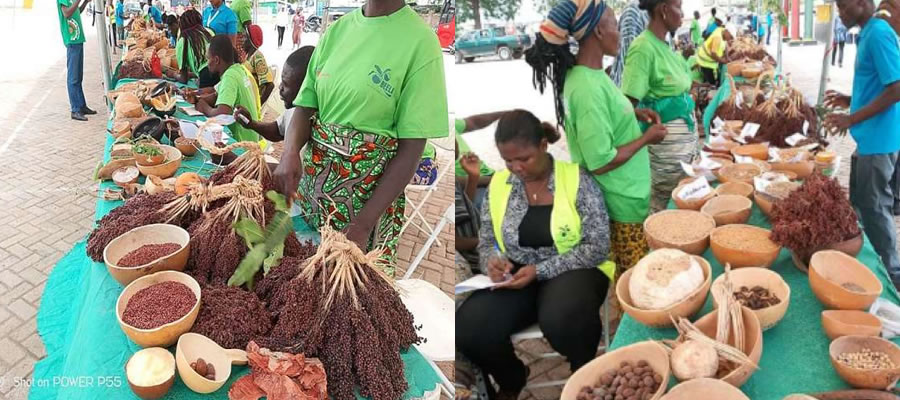
The fair, organised in Bolgatanga by Trax Ghana in collaboration with the Beela Project, aimed to preserve indigenous seed varieties threatened with extinction while promoting seed diversity among smallholder farmers.
The event brought together smallholder farmers, officials from the Department of Agriculture, the National Commission on Culture, traditional authorities, the Forestry Commission, District Assemblies, and civil society organisations.
It also provided a platform for farmers to exchange indigenous seeds and share knowledge on traditional farming practices.
Speaking to the media, the Director of Trax Ghana, Mr. Vincent Subbey, said the fair was intended to improve farmers’ access to quality local seeds and strengthen community seed systems in the Upper East and North East Regions.
According to him, the initiative seeks to conserve biodiversity, protect community seed systems, promote seed sovereignty, and encourage agroecological farming practices among local farmers.
“This partnership project is aimed at conserving biodiversity, preserving community seed systems and seed sovereignty, and promoting knowledge sharing and agroecology among farmers,” he stated.
Mr. Subbey explained that Trax Ghana is a non-profit organisation committed to promoting agroecology and biodiversity conservation to enhance food security in northern Ghana.
The Director of the Beela Project, Ms. Abena Offeh-Gyimah, noted that the organisation works to preserve native and local seeds through seed fairs, indigenous cooking exhibitions, and seed and knowledge exchange programmes across the Upper East and North East Regions.
She explained that the annual seed fair, now in its third year, was strategically organised at the onset of the rainy season to give farmers access to a wide range of indigenous seeds for cultivation.
Ms. Offeh-Gyimah disclosed that the previous edition attracted 192 participants, including 154 farmers and 38 representatives from civil society organisations and local government institutions.
She added that more than 400 seed varieties were displayed during the 2025 fair, while 114 farmers participated in seed exchanges, with 23 donating seeds and 91 receiving them.
According to her, the exchange of indigenous seeds among farmers helps preserve crop varieties across communities and strengthens local agrobiodiversity and food systems.
“Strengthening local and indigenous food systems in the Upper East and North East Regions remains one of our key goals,” she emphasised.
Ms. Offeh-Gyimah further revealed that the project had supported the Gundoug community in the Nabdam District to establish a Community Seed Bank, which now serves as a learning centre for other communities in the region.
She identified limited knowledge in the selection and preservation of indigenous seeds as one of the major challenges facing smallholder farmers and said the Beela Project was building farmers’ capacity in seed selection and preservation techniques.
Some beneficiary farmers who attended the fair also shared their experiences regarding the benefits of indigenous seeds.
Mrs. Amobono Alice, one of the farmers, said indigenous seeds performed better on her farm than foreign hybrid varieties.
“I planted foreign corn seeds on one farm and indigenous corn seeds on another. I used fertilisers and weedicides on the foreign seeds, while I applied organic manure to the indigenous crops. After a few weeks, the foreign crops started drying up, but the indigenous crops were flourishing,” she recounted.
Another beneficiary farmer, Mr. Jeo Atule, said indigenous crops remained closely linked to the culture and traditions of the people in the region.
He explained that many local crops are used during funerals, festivals, and naming ceremonies, making their preservation important to safeguarding cultural heritage.
Mr. Atule commended the Beela Project for championing the preservation of indigenous seeds and called on stakeholders, especially traditional authorities and the Ministry of Food and Agriculture, to support the initiative.
Other Stories

Local Gov Ministry
Int of Local Gov Studies
Ministry of Information
Local Gov Service
Ghana MPs
Ghana Hospitals
NALAG
 facebook
 X
X
 Youtube
 instagram
 whatsapp
 +233 593 831 280
+233 20 230 9497
+233 593 831 280
+233 20 230 9497 0800 430 430
 GPS: GE-231-4383
 info@ghanadistricts.com
 Box GP1044, Accra, Ghana