- Item


Harvesting Prosperity: Asutifi North’s 58%-Driven Agriculture
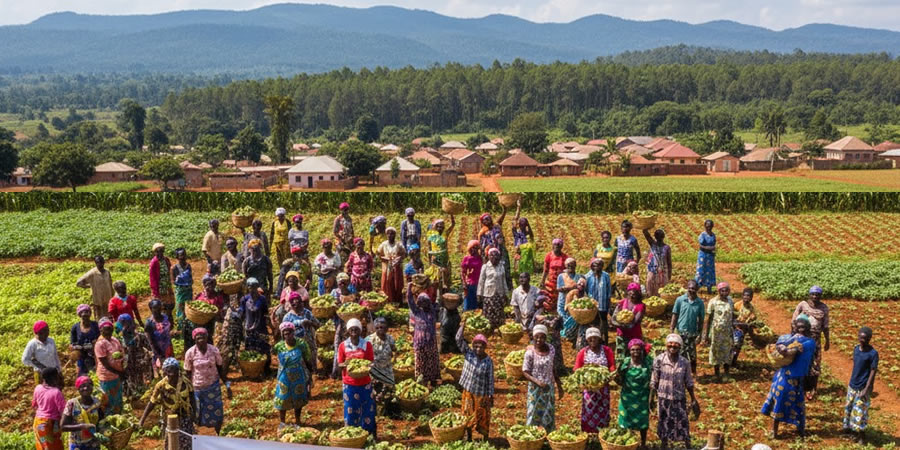
Date Created : 2/3/2026 5:31:58 AM : Story Author : Ernestina Mensah/Ghanadistricts.com
Explore the crops that feed families and the crops that power industry, plus how support systems are transforming livelihoods.
How the sector looks on the ground
Dominant livelihoods: 58% of the district’s population relies on agriculture; crop farming leads the pack
Food crops: Maize, cassava, rice, plantain, and coconut form the backbone of local diets
Veggies and cash crops: Tomatoes, garden eggs, okro, and pepper are key vegetables; cocoa, oil palm, citrus, coffee, and cashew diversify income
Farming profile: Predominantly peasant farmers with a mix of tree planting, livestock rearing, and fish farming
Service delivery and support
Government role: The Department of Agriculture coordinates extension services, veterinary support, group formation, and on-farm training
Outreach activities: Home visits, field visits, technical training, and on-farm demonstrations help farmers adopt better practices
Plant health and protection: Pest and disease surveys help safeguard yields and livelihoods
Impact and potential
Productivity boost: Professional extension and practical demonstrations aim to raise farm incomes and reduce post-harvest losses
Diversification dividends: A mix of food crops and high-value cash crops can stabilize household income against climate shocks
Community resilience: Training and support networks strengthen local farming communities and food security
Historical context and scale
2010 baseline: 8,024 agricultural households reported, with crop farming as the dominant activity (7,887 households), followed by livestock rearing (2,318)
Growth trajectory: With ongoing extension services, the district is positioned to expand adoption of improved farming techniques, inputs, and market linkages
What to watch next
Input access: Availability of quality seeds, fertilizers, and agro-chemicals to peasant farmers at affordable rates
Technology uptake: Adoption of climate-smart farming, water harvesting, and post-harvest innovations
Market linkages: Enhanced access to buyers, value chains for crops and livestock, and potential agro-processing investments
Asutifi North’s agriculture landscape sits at a pivotal juncture—anchored by a large farming population and a robust support framework. With continued investment in extension services, training, and inputs, the district could elevate productivity, livelihoods, and food security for thousands of households
Other stories






Local Gov Ministry
Int of Local Gov Studies
Ministry of Information
Local Gov Service
Ghana MPs
Ghana Hospitals
NALAG
 facebook
 X
X
 Youtube
 instagram
 whatsapp
 +233 593 831 280
+233 20 230 9497
+233 593 831 280
+233 20 230 9497 0800 430 430
 GPS: GE-231-4383
 info@ghanadistricts.com
 Box GP1044, Accra, Ghana