- Item


ENVIRONMENT
Nzema East: Where Soil and Stone Shapes Farming And Mining
Rubber, cocoa, and oil palm dominate the agricultural landscape, with cocoa serving as a traditional mainstay and oil palm and rubber providing important supplementary incomes in the Nzema East Municipality.
Date Created : 11/5/2025 : Story Author : Ghanadistricts.com
To sustain productivity, farmers pursue soil management practices that include liming to temper acidity, site-specific fertilization, and robust soil-health practices to maintain yields over time. The area’s heavy rainfall accelerates nutrient leaching, meaning farmers must work with the land’s natural tendencies. In this environment, tree crops have shown the best resilience.
The leaching process also has economic and environmental implications. Rapid nutrient loss can lead to yield fluctuations and waning soil quality if not countered with deliberate management. Agricultural experts emphasize practices such as increasing soil organic matter, diversifying crops, agroforestry, and cover cropping to improve soil structure, moisture retention, and resilience to climate variability. A thoughtful combination of these methods can help the municipality sustain a broad agricultural portfolio beyond cocoa and oil palm.
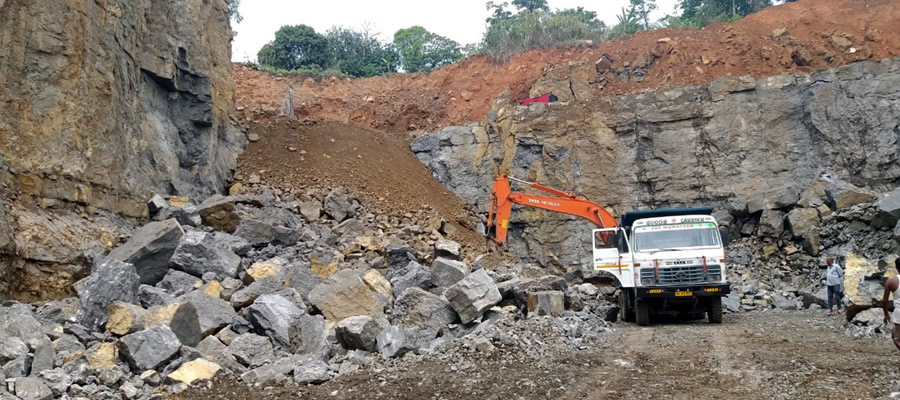
Apart from its agricultural potentials, Nzema East sits atop a geologic tapestry dominated by Cambrian rocks of the Birimean formation, alongside Tarkwaian sandstone, association quartzite, and phyllites. Embedded within this ancient bedrock are minerals such as kaolin, silica, gold, and sandstone, signaling potential for mineral-based industries, artisanal mining, and downstream processing.
About 98 percent of Nzema East’s land is under ferric Acrisols, a soil type that is acidic and naturally low in nutrients. The region’s soils reflect this complexity, with ferric Acrisols covering the vast majority of land and supporting several major crops, while also presenting nutrient challenges that arise from high rainfall and intense leaching.
With kaolin, silica, and gold among the minerals of interest, Nzema East has opportunities for formal mining, processing, and downstream manufacturing that could diversify the economy. Yet robust environmental protections, regulatory oversight, and inclusive community planning are essential to prevent irreversible damage. Strengthening land-use planning, improving information access, and fostering open dialogue with residents will be key components of Nzema East’s sustainable development strategy.
Looking ahead, municipality potential will depend on aligning sustainable agricultural practices with responsible mining governance and forward-looking land-use policies. Investments in soil health, water quality protection, and community engagement can help harness natural resources for long-term prosperity while safeguarding the environment and public health. If managed carefully, Nzema East could build a diversified economy that supports a wide range of livelihoods—farmer, miner, and beyond—without compromising the health of residents or the integrity of the landscape.
Other Stories





GoG Portal
Local Gov Ministry
Int of Local Gov Studies
Ministry of Information
Local Gov Service
Ghana MPs
Ghana Hospitals
NALAG
Local Gov Ministry
Int of Local Gov Studies
Ministry of Information
Local Gov Service
Ghana MPs
Ghana Hospitals
NALAG
 facebook
 X
X
 Youtube
 instagram
 +233 593 831 280
+233 20 230 9497
+233 593 831 280
+233 20 230 9497 0800 430 430
 GPS: GE-231-4383
 info@ghanadistricts.com
 Box GP1044, Accra, Ghana