- Item


Agriculture in AWMA: Urban Farming and Livelihoods in a Growing Municipality
Date Created : 11/19/2025 4:57:43 AM : Story Author : Ghanadistricts.com
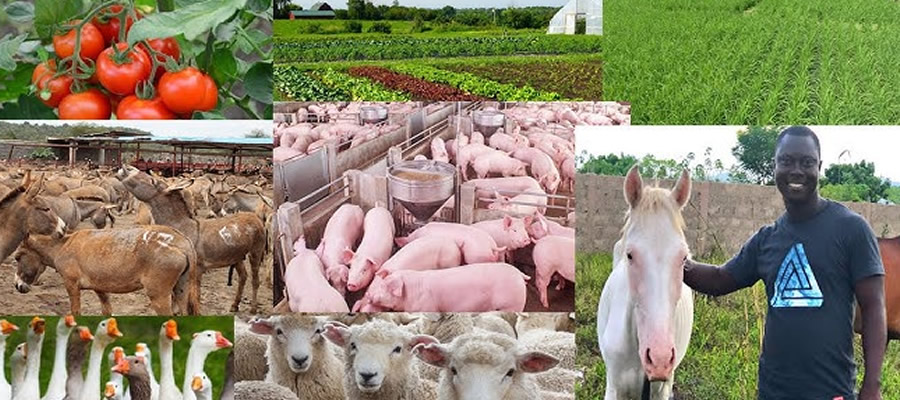
Despite space constraints, AWMA has carved out a niche for both exotic and local vegetables, building a reputation for diverse produce that serves local markets and household kitchens. Data summarized in Tables 1.8 and 1.9 indicate a community of about 449 farmers, comprising around 400 men and 49 women, highlighting a predominantly male participation with growing female engagement in recent years.
Products and Producers
The agricultural profile of AWMA shows a strong emphasis on vegetable cultivation, including both exotic varieties and locally adapted crops. This urban agriculture mix supports fresh produce supply for residents and contributes to local food security. In addition to crops, a small but notable livestock sector exists, with farmers rearing goats, sheep, cattle, rabbits, guinea fowls, and pigs. While livestock numbers are modest compared to crop production, their presence underlines the role of agriculture as a diversified livelihood for urban residents, particularly those with limited land resources.
Challenges and Constraints
The sector faces several fundamental challenges that hinder expansion and productivity. Foremost among them is the loss of farmlands to ongoing urbanization, which constricts the space available for cultivation and can disrupt traditional farming practices. Water quality and reliability also pose risks; many farming operations rely on sources that may be unsafe or inconsistent, complicating irrigation and livestock care. Financial constraints further constrain growth, with insufficient funding limiting access to inputs, technology, and credit. The high cost of agricultural inputs, combined with an erratic rainfall pattern linked to climate variability, adds to the uncertainty faced by farmers and traders alike.
Strategic Priorities for the Plan Period
The Department of Agriculture envisions a multi-pronged set of interventions to strengthen the rural-urban agricultural economy and improve livelihoods. Key priorities include the facilitation of government flagship programs that support farmers, processors, and traders. The plan emphasizes technology transfer and enhanced extension services to disseminate best practices in crop management, pest control, soil health, and water use efficiency. By strengthening extension delivery, AWMA aims to shorten the gap between research and on-the-ground application, enabling farmers to adopt innovations that can increase yields and resilience.
Support for Livelihoods and Value Chains
Beyond production, the agricultural plan recognizes the importance of processing and marketing to farmers’ livelihoods. Extension services will be complemented by support for value chain development, helping farmers access inputs, agri-finance, and market opportunities. Training and capacity-building initiatives will equip participants with skills in post-harvest handling, food safety, and simple value-added processing, contributing to more stable incomes and reduced post-harvest losses.
Governance, Partnerships, and Implementation
Successful implementation will require coordinated governance and strong partnerships among government agencies, farmers’ groups, private sector actors, and community organizations. The Department of Agriculture plans to work closely with existing extension networks, local buyers, and agro-enterprises to create an enabling environment for farmers to thrive within the constraints of an urban setting. Monitoring and evaluation will be integral, with regular reviews of crop yields, input accessibility, water quality, and the effectiveness of extension services to ensure that programs translate into tangible improvements in livelihoods.
Other stories



Local Gov Ministry
Int of Local Gov Studies
Ministry of Information
Local Gov Service
Ghana MPs
Ghana Hospitals
NALAG
 facebook
 X
X
 Youtube
 instagram
 whatsapp
 +233 593 831 280
+233 20 230 9497
+233 593 831 280
+233 20 230 9497 0800 430 430
 GPS: GE-231-4383
 info@ghanadistricts.com
 Box GP1044, Accra, Ghana