- Item


Central Tongu District Assembly Leads in Environmental Sanitation to Safeguard Health and Prosperity
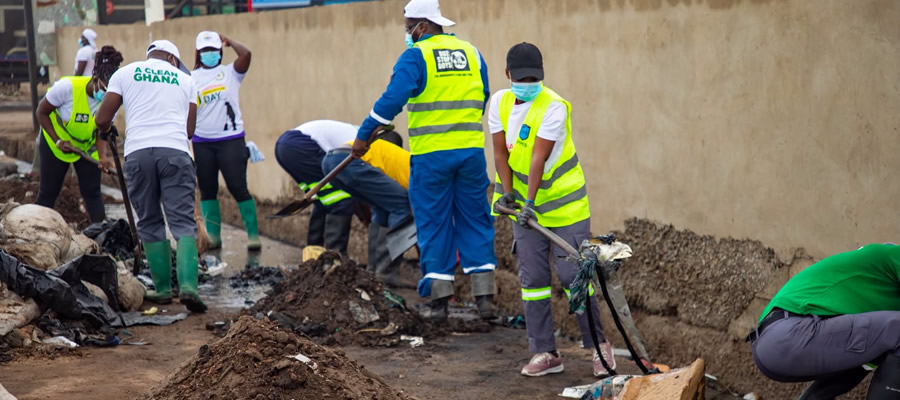
Date Created : 11/24/2025 3:52:54 AM : Story Author : Ghanadistricts.com
The Government’s National Environmental Action Plan (1991–2000) similarly prioritized environmental sanitation, alongside the establishment and enforcement of environmental and health standards. To this, the Central Tongu District Assembly is intensifying efforts to allocate development resources strategically within a defined framework that maximizes impact on sanitation outcomes for residents.
Waste management: solid and liquid waste
The Environmental Health Unit of the Central Tongu District is implementing a robust plan for both solid and liquid waste disposal. Refuse containers are positioned at various sanitary points across the district, with communal containers serving predominantly low-income communities. The district currently partners with Zoomlion Ghana Limited as the sole registered waste contractor, responsible for distributing litter bins and providing collection services to registered households. In addition, the district maintains a final disposal site capable of handling both solid and liquid waste, ensuring that waste reaches an environmentally sound endpoint.
Housing sanitation
A notable challenge in the district arises from housing construction that often lacks dedicated toilet facilities. This gap has historically contributed to reliance on public toilet facilities and, in some cases, open defecation. In response, environmental health officers have intensively sensitized landlords about providing household sanitation facilities. This concerted outreach has yielded tangible progress, particularly in the adoption of bio fill toilet systems within homes, thereby reducing pressure on public facilities and enhancing privacy and safety for residents.
Drainage and water management
Inadequate drainage remains a major obstacle in parts of Central Tongu. Many residential zones lack well-engineered drainage networks, and existing drains frequently become obstructed by solid waste. The limited number of drains and their restricted capacity contribute to the accumulation of liquid waste and rainwater, forming gullies around houses. Stagnant liquid waste becomes a breeding ground for mosquitoes, elevating the risk of vector-borne and water-borne diseases such as malaria, diarrhoea, and cholera. The district recognizes the direct link between drainage infrastructure and public health and is prioritizing targeted improvements.
Public health implications
Effective environmental sanitation yields measurable health benefits, including reduced incidence of water-borne and vector-borne diseases, improved overall community well-being, and enhanced economic productivity. By strengthening waste management, expanding household sanitation, and upgrading drainage systems, Central Tongu aims to create healthier living environments, reduce disease transmission, and promote resilient communities.
Ongoing and future efforts
- Strengthening waste management: Expand access to reliable waste collection services, increase the number of communal containers in underserved areas, and ensure timely disposal at the district’s final disposal site.
- Expanding household sanitation: Continue landlord engagement and resident education to install functional toilets within homes, with emphasis on sustainable solutions such as bio fill systems where appropriate.
- Upgrading drainage infrastructure: Assess drainage networks, clear chokepoints, and implement improvements to enhance flow during heavy rainfall, complemented by public education on proper waste disposal to prevent blockages.
- Community involvement: Engage local leaders, health workers, NGOs, and residents to tailor sanitation programs to local needs and to monitor outcomes over time.
What residents can do
- Practice responsible waste disposal: Use provided containers, participate in clean-up campaigns, and avoid disposing of litter or non-biodegradable waste in drainage paths.
- Support household sanitation improvements: Where feasible, install or upgrade in-home toilets and prioritize household hygiene practices.
- Report issues: Inform environmental health officers or district offices about clogged drains, overflowing containers, or unsafe sanitation conditions.
- Participate in planning: Attend public meetings to share feedback and help shape district sanitation priorities.
Next steps and call to action
The Central Tongu District Assembly will continue to scale sanitation programs, expand waste management services, broaden access to household sanitation facilities, and upgrade drainage systems. Residents are encouraged to participate in program activities, report sanitation issues promptly, and adopt hygiene practices that protect families and communities.
Other stories


Local Gov Ministry
Int of Local Gov Studies
Ministry of Information
Local Gov Service
Ghana MPs
Ghana Hospitals
NALAG
 facebook
 X
X
 Youtube
 instagram
 whatsapp
 +233 593 831 280
+233 20 230 9497
+233 593 831 280
+233 20 230 9497 0800 430 430
 GPS: GE-231-4383
 info@ghanadistricts.com
 Box GP1044, Accra, Ghana