- Item


SECURITY
Ho Female Prison intensifies skills training to rehabilitate inmates
Date Created : 11/4/2026 : Story Author : Frank Kwame Abbor/Ghanadistricts.com
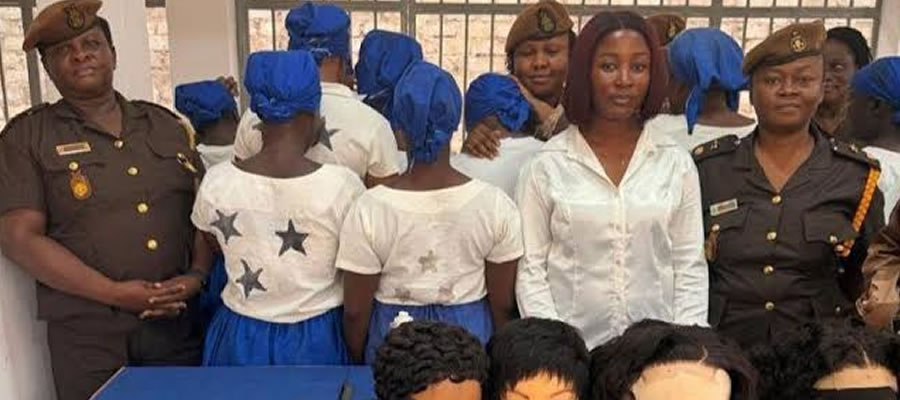
Assistant Director of Prisons (ADP) Lydia Odoi Yemoh, Officer-in-Charge of the facility, said the programmes included bread baking, liquid soap and disinfectant production, doormat weaving, dressmaking, poultry farming and fish farming.
“We want to make sure that whoever passes through our hands will never go back the same,” she said.
In an interview, ADP Yemoh said inmates were trained to produce various types of bread, including wheat and chocolate bread. She noted that an industrial sewing machine donated by the Hands on Hearts Foundation had also expanded opportunities for fashion design and garment production training.
She said products such as bread and liquid soap were sold to generate income to sustain the training programmes.
ADP Yemoh explained that inmates underwent counselling upon admission to help identify their interests and select suitable vocational training programmes.
She added that teachers from the Ghana Education Service (GES) visited the facility twice a week to provide formal education.
Describing the education programme as impactful, she cited the case of an inmate who entered the facility without any formal classroom experience but had since acquired basic English communication skills.
The Officer-in-Charge said the prison also operated poultry and fish farming projects, supported by donations of between 350 and 400 birds and catfish fingerlings from Generational Thinkers.
She said veterinary officers periodically inspected the birds, while the projects provided inmates with practical agricultural skills and kept them productively engaged.
On inmate welfare, ADP Yemoh said clinical psychologists were periodically invited to provide mental health support.
She, however, appealed for public assistance to establish a baby-friendly unit where nursing mothers and their babies could be accommodated separately from other inmates.According to her, the facility currently had a breastfeeding infant in custody with the mother, who was receiving postnatal care and adequate nutritional support.
ADP Yemoh called on non-governmental organisations, faith-based organisations, corporate bodies and individuals to support the prison with skills-training programmes, equipment and start-up kits to help inmates establish sustainable livelihoods after their release.
“Sometimes we do all that we can, but without start-up kits for them to start something meaningful, it is very difficult,” she said.
She identified commercial ovens, industrial sewing machines and poultry equipment as some of the items needed to strengthen the facility's rehabilitation efforts.
ADP Yemoh also appealed to families and the public to support, rather than stigmatise, former inmates after their release.
She encouraged families to maintain regular contact with inmates during their incarceration, noting that acceptance and practical support after release were essential to sustaining rehabilitation gains and preventing reoffending.
Reflecting on her eight to nine months at the facility, she highlighted key interventions undertaken during her tenure, including the renovation of the Officer-in-Charge's bungalow, support for the poultry and fish farming projects, installation of a signpost identifying the female prison and efforts to improve the access road.
She acknowledged the support of Eco Capital, John the Baptist and other partners, saying their contributions had enhanced the facility's operations and visibility.
ADP Yemoh, who is scheduled to retire from the Ghana Prisons Service on Friday, November 6, said her work had been guided by a commitment to transforming lives.
Describing prison service as “a calling” and the work of “managing people’s souls,” she urged the public to support correctional institutions in their rehabilitation mandate and encouraged young people interested in joining the Service to embrace the responsibility of serving humanity.
Other Stories



Local Gov Ministry
Int of Local Gov Studies
Ministry of Information
Local Gov Service
Ghana MPs
Ghana Hospitals
NALAG
 facebook
 X
 Youtube
 instagram
 whatsapp
 +233 593 831 280
+233 20 230 9497
 0800 430 430
 GPS: GE-231-4383
 info@ghanadistricts.com
 Box GP1044, Accra, Ghana