- Item


AGRICULTURE
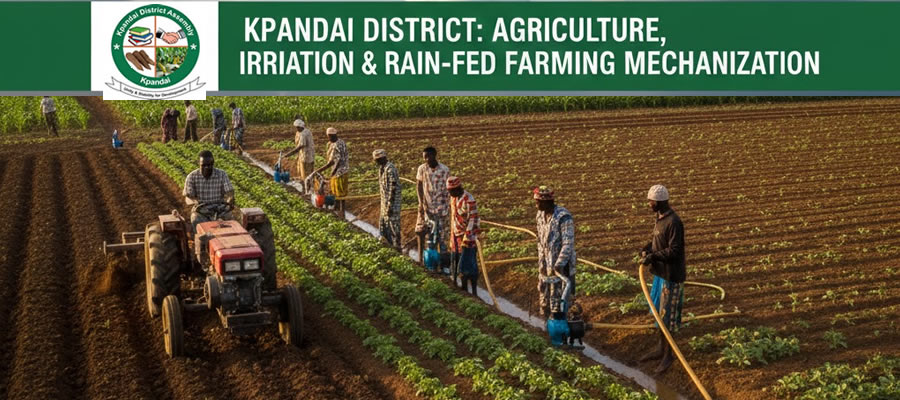
Agriculture still rain-fed as water resources remain untapped in the Kpandai District
Date Created : 12/18/2025 : Story Author : Ghanandistricts.com
About 85.7% of the population rely on agriculture and allied activities, yet the sector is trapped in traditional, rain-fed methods. Experts say the district’s vast water resources present a huge irrigation opportunity—if only farmers had the tools, training, and irrigation infrastructure to seize it.
In the heart of the Kpandai District, farming is not just an occupation—it’s the lifeblood of communities. Yet farmers face a stubborn reality: their tools are crude, yields are hampered by inefficient methods, and the district remains largely non-mechanized.
The rain-fed system, while traditional and familiar, is increasingly inconsistent in a changing climate, threatening food security and income for many households.
Meanwhile, the district sits on a potential irrigation goldmine. Enormous water resources could transform farming from subsistence to profitable commercial farming if irrigation systems and training are put in place.
The absence of irrigation facilities and limited knowledge about irrigation development are the primary roadblocks.
The Kpandai District’s heavy reliance on rain-fed farming could transform with irrigation, mechanization, and targeted farmer training needed to boost yields, incomes, and food security in the district.
Other Stories





Local Gov Ministry
Int of Local Gov Studies
Ministry of Information
Local Gov Service
Ghana MPs
Ghana Hospitals
NALAG
 facebook
 X
X
 Youtube
 instagram
 whatsapp
 +233 593 831 280
+233 20 230 9497
+233 593 831 280
+233 20 230 9497 0800 430 430
 GPS: GE-231-4383
 info@ghanadistricts.com
 Box GP1044, Accra, Ghana