- Item

SOCIAL
Oforikrom Road Network needs critical facelift to Boost Mobility and Economic Activity
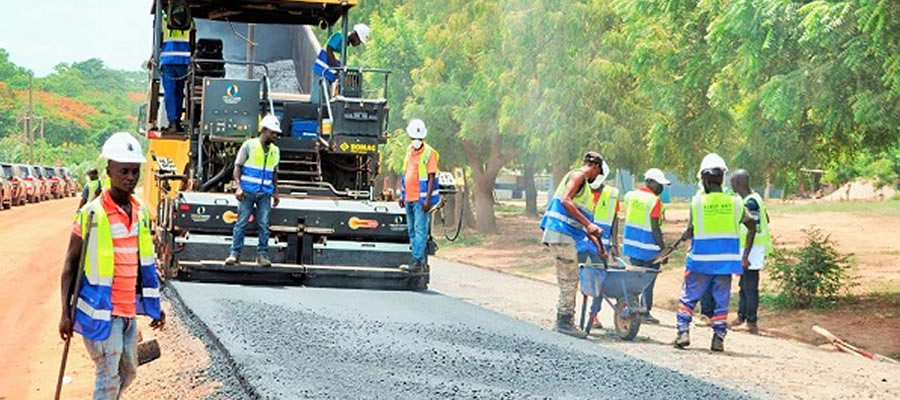
The road system in the Oforikrom Municipality plays a pivotal role in connecting communities and supporting commerce across the district. Serving as a key link along the Accra–Kumasi–Tamale corridor, the municipality boasts a total road length of 386.5 kilometers.
Date Created : 11/27/2025 : Story Author : Ghanandistricts.com
Of this total, about 135.28 kilometers, or 35 percent, are paved, while 251.22 kilometers, or 65 percent, remain unpaved. The distribution of paved and unpaved routes highlights the ongoing challenges in ensuring reliable year-round accessibility for residents, traders, and commuters.
Within the municipality, several communities stand out for their motorable road networks. Bomso, the Kwame Nkrumah University of Science and Technology (KNUST) Campus area, Kentinkrono, Oduom, and Ayigya Zongo Extension are noted for having functional roads that support daily movement and economic activity. Despite this, a majority of other communities rely on main road tarred routes or motorable roads that can become problematic in adverse weather or after heavy rainfall. In many areas, the condition of existing road infrastructure has deteriorated, limiting travel speed, increasing vehicle operating costs, and impacting access to essential services.
Experts and local stakeholders caution that the current road network is insufficient to meet the growing needs of a rapidly developing municipality. The heavy reliance on unpaved roads not only affects mobility but also has broader implications for safety, timely access to healthcare and education, and the efficiency of local markets. The call from residents is clear: the road sector requires a substantial facelift to improve functionality, resilience, and reliability.
To address these concerns, municipal authorities are exploring comprehensive road improvement plans that prioritize resurfacing and maintenance of major routes, rehabilitation of feeder roads, and better drainage to reduce washouts during the rainy season. Upgrading critical corridors could unlock faster movement for goods and people, attract investment, and open new opportunities for small-scale farmers and traders who depend on reliable transport to reach markets.
Stakeholders underscore that a multi-faceted approach will be essential. This includes not only paving and resurfacing but also implementing robust maintenance programs, improving drainage to prevent flooding, and introducing traffic management measures to reduce congestion in busy corridors. Community engagement will be central to the process, ensuring that residents’ experiences and needs guide prioritization and implementation. Transparent planning and timely communication about road works will be crucial to minimize disruption and maximize benefits.
As the municipality charts a path toward modernized infrastructure, the potential economic benefits are substantial. Improved roads can shorten travel times, reduce vehicle operating costs, and boost access to schools, healthcare facilities, and business districts. A more reliable road network is also likely to encourage investment, support local entrepreneurship, and stimulate job creation in construction, maintenance, and related services.
In the coming months, officials say they will release detailed road maps, including which routes will be prioritized for upgrades and a realistic timeline for completion. Citizens are encouraged to participate in public consultations and to provide feedback on road conditions in their neighborhoods. With a strategic, well-implemented road upgrade program, Oforikrom aims to deliver a safer, more efficient, and more economically vibrant transportation network for residents today and for the future.
Other Stories





GoG Portal
Local Gov Ministry
Int of Local Gov Studies
Ministry of Information
Local Gov Service
Ghana MPs
Ghana Hospitals
NALAG
Local Gov Ministry
Int of Local Gov Studies
Ministry of Information
Local Gov Service
Ghana MPs
Ghana Hospitals
NALAG
 facebook
 twitter
 Youtube
 +233 593 831 280
+233 20 230 9497
+233 593 831 280
+233 20 230 9497 0800 430 430
 GPS: GE-231-4383
 info@ghanadistricts.com
 Box GP1044, Accra, Ghana