- Item

SOCIAL
Mampong Municipality: Celebrating Tradition, Unity, and Development
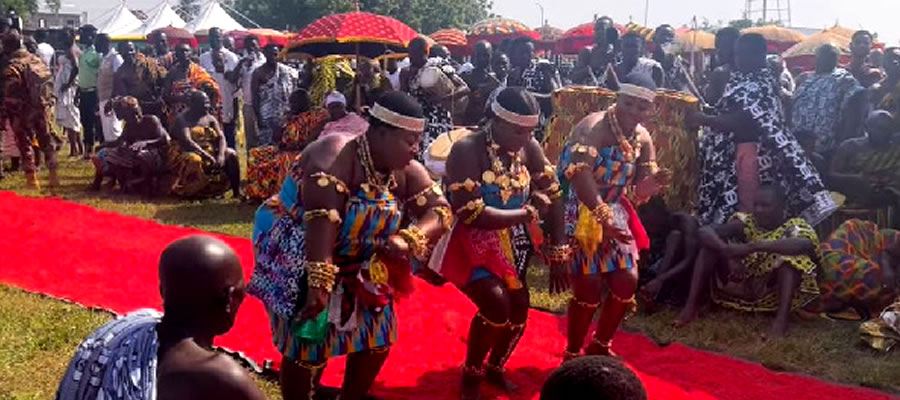
The cultural heritage of the Mampong Municipality is deeply rooted in traditional authority and clan relationships. Formerly part of the Sekyere West Municipal, which had four paramouncies, Mampong, Nsuta, Kwamang, and Beposo—the current Mampong Municipality now has only one paramountcy.
Date Created : 12/4/2025 12:00:00 AM : Story Author : Ghanadistricts.com
In addition, there are ten divisional or sub-paramouncies, traditionally referred to as Abrempon, which play vital roles in the administration of local customs and traditions.
At the center of Mampong’s traditional authority is the Amaniampong Silver Stool, which holds a unique position within the Ashanti Kingdom. It is regarded as second in importance to the Golden Stool, the symbolic unifying force of Asanteman. By tradition, the Asantehene is considered the uncle of the Mamponghene, underscoring the close ties between Mampong and the broader Ashanti cultural hierarchy.
Clan relationships also form a strong cultural bond among communities in the municipality. Settlements such as Apaah, Kyekyewere, Ninting, Nsuase, and Benim all belong to the Bretuo Clan, reinforcing unity and shared identity across the area. These clan ties extend beyond the municipality, linking Mampong to sister stools in the Sekyere Central Municipal. The Nsuta Stool belongs to the Oyoko Clan, Beposo to the Agona Clan, and Kwamang to the Aduana Clan, reflecting the diversity and interconnectedness of traditional leadership in the Ashanti Region.
The traditional set-up of Mampong Municipality not only preserves cultural heritage but also strengthens social cohesion and identity among its people. These structures continue to play a significant role in governance, conflict resolution, and the promotion of customs that define the municipality’s place within the Ashanti Kingdom.
Related News Headlines





GoG Portal
Local Gov Ministry
Int of Local Gov Studies
Ministry of Information
Local Gov Service
Ghana MPs
Ghana Hospitals
NALAG
Local Gov Ministry
Int of Local Gov Studies
Ministry of Information
Local Gov Service
Ghana MPs
Ghana Hospitals
NALAG
 facebook
 X
X
 Youtube
 instagram
 whatsapp
 +233 593 831 280
+233 20 230 9497
+233 593 831 280
+233 20 230 9497 0800 430 430
 GPS: GE-231-4383
 info@ghanadistricts.com
 Box GP1044, Accra, Ghana