- Item

ECONOMICS
Central Tongu’s Gari Crown and Market Dynamics: A Feature on Local Trade, Production, and Prosperity
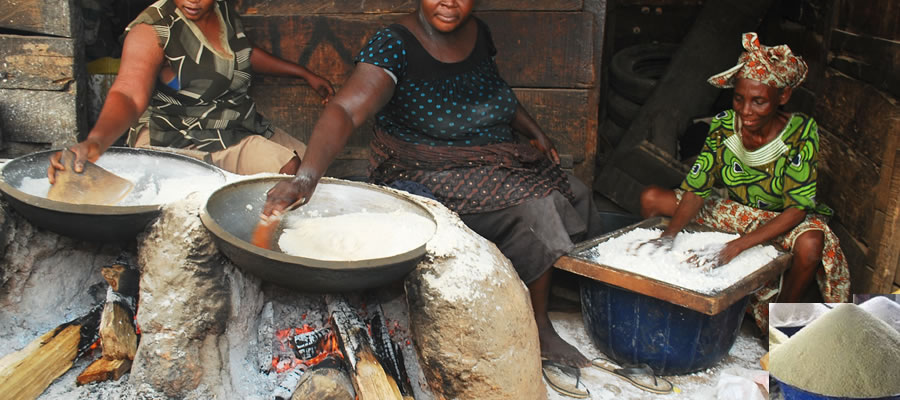
Central Tongu is distinguished by the quality of its gari processing, a staple that attracts traders from major markets within roughly 100 kilometers of Mafi-Kumasi.
Date Created : 11/24/2025 12:00:00 AM : Story Author : Ghanadistricts.com
Among the district’s market centers, Mafi-Kumasi stands out as a primary hub, followed closely by Avedo market. Adidome market, despite being situated in the district capital, experiences comparatively lower trader turnout, highlighting uneven market concentration within the district. Beyond gari, the district exports a diversified mix including pepper, cassava dough and peel, pineapple, maize, and beans, illustrating a resilient agricultural economy that supports multiple value chains.
Gari remains a crucial livelihood for many households, produced by approximately half of the women within the district’s economically active population. This strong female participation underscores the gendered dimension of the gari value chain, from processing to distribution. While widespread involvement supports household incomes and community resilience, it also interacts with market demand in ways that can influence prices. When supply exceeds demand, buyers may adjust pricing strategies, underscoring the importance of balanced production planning, quality control, and market information systems to stabilize earnings for producers, many of whom are women.
Residents in Central Tongu engage with a broad network of markets beyond district boundaries. The principal external markets frequented include Accra, Ada, Ho, Akatsi, Dabala, Denu, and Aflao. Agro-produce forms the backbone of cross-district trade, with gari, pepper, cassava, maize, beans, and other staples moving along these corridors. Within the district, local trade centers feature goods such as fish, vegetables, maize, and daily essentials, creating a balanced local economy that supports both production and consumption across communities.
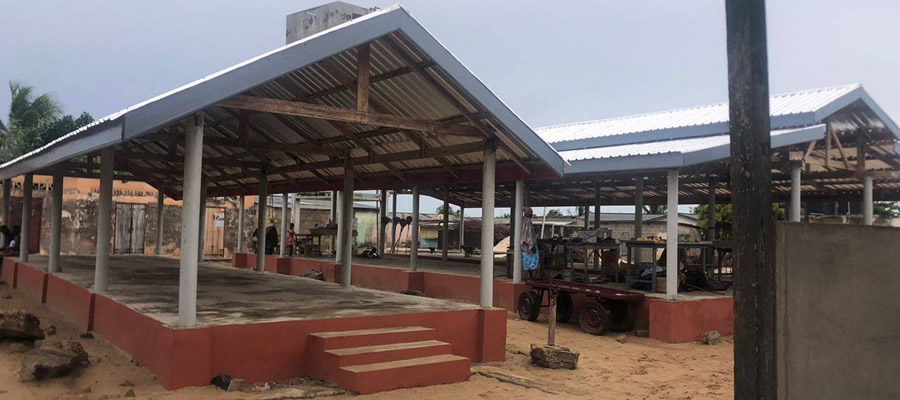
Market centers like Mafi-Kumasi and Avedo are more than venues for buying and selling; they are vibrant social and information exchange nodes. They influence price discovery, inform planting calendars, and shape household budgeting. The geographic concentration of traders at these hubs presents opportunities for targeted market-enhancement interventions, including better storage facilities, value-added processing for gari and cassava products, and strengthened transport links to reduce spoilage and extend market reach. A deliberate focus on improving market infrastructure could help smallholders many of whom are women access higher-value markets and achieve more predictable incomes.
To safeguard and grow the district’s market-driven economy, policymakers, traders, and producers should consider a multi-pronged approach: invest in post-harvest handling, storage, and processing facilities to reduce losses and extend shelf life; support women-led enterprises within the gari value chain through targeted training, microfinance access, and cooperative models that amplify bargaining power; strengthen linkages to input suppliers, finance, and technology through public–private partnerships and district-led programs; develop clear market days and road infrastructure to improve accessibility to major hubs and reduce transaction costs; and promote quality standards and certification where feasible to widen access to higher-value markets and ensure fair pricing for producers.
Sustainable market growth must go hand in hand with environmental stewardship. Initiatives to improve agricultural practices, water management, and waste reduction help protect natural resources while supporting long-term productivity. Community education on sustainable processing methods and safe handling of gari products also protects public health and enhances consumer confidence in locally produced goods.
Residents can participate by supporting local producers, especially women-led gari processing groups, and by seeking out locally produced staples at farmers’ markets. Farmers and traders should engage with district extension services to access market information, training in post-harvest techniques, and opportunities for cooperative development. Buyers from within and outside the district are encouraged to source gari and other agro-products from Central Tongu, ensuring fair pricing and ethical sourcing practices that sustain livelihoods.
As Central Tongu crafts its development path, a coordinated governance approach that integrates market access, value addition, and gender-inclusive strategies will be essential. With continued investment in infrastructure, capacity building, and market intelligence, the district can enhance food security, stabilize incomes, and raise the standard of living for families across communities.
Related News Headlines









GoG Portal
Local Gov Ministry
Int of Local Gov Studies
Ministry of Information
Local Gov Service
Ghana MPs
Ghana Hospitals
NALAG
Local Gov Ministry
Int of Local Gov Studies
Ministry of Information
Local Gov Service
Ghana MPs
Ghana Hospitals
NALAG
 facebook
 X
X
 Youtube
 instagram
 +233 593 831 280
+233 20 230 9497
+233 593 831 280
+233 20 230 9497 0800 430 430
 GPS: GE-231-4383
 info@ghanadistricts.com
 Box GP1044, Accra, Ghana