- Item

EDUCATION
Over 200 Girls Trained to Produce Their Own Reusable Sanitary Pads
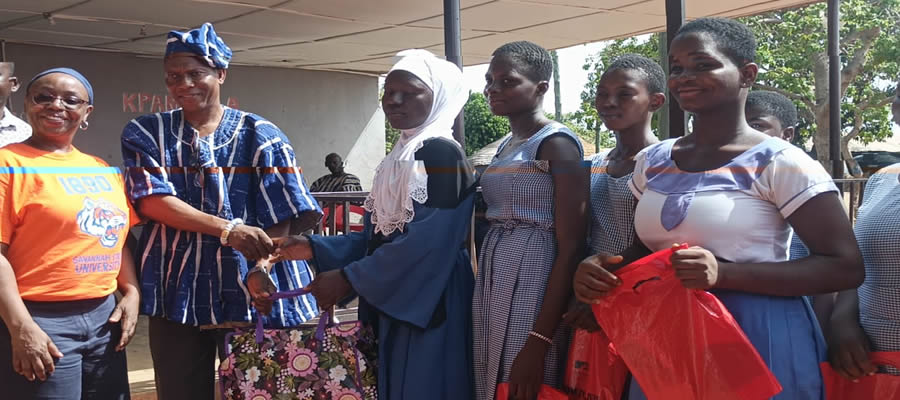
Date Created : 6/11/2026 12:00:00 AM : Story Author : Mary Ayertey/Ghanadistricts.com
The initiative was undertaken by the Network for Rural Missions in partnership with Savannah State University in the United States.
The programme provided the beneficiaries with practical skills in producing reusable sanitary products, alongside handheld sewing machines and materials to support local production.
Speaking during the presentation ceremony held in Nakpanduri as part of the World Menstrual Hygiene Day celebration, the Executive Director of the Network for Rural Missions, Madam Grace Fant Kombian, encouraged the girls to practise proper menstrual hygiene and use the skills acquired to support themselves and others.
She also urged them to speak openly about menstrual health and help eliminate the stigma surrounding menstruation.
Dr. Roenia Deloach, Professor in the Department of Social Work and Interim Dean of the College of Science and Humanities at Savannah State University, emphasised the importance of education in addressing poverty and improving opportunities for young women.
She encouraged the beneficiaries to take their education seriously and share the knowledge acquired with their peers to extend the benefits of the programme to more girls.
The District Education Director for Bunkpurugu-Nakpanduri, Mr. Hope Noble Kwashie, also called on parents, community leaders and other stakeholders to prioritise the empowerment and welfare of girls.
He stressed that improving menstrual health education and creating supportive environments for young women were essential to the district's development.
The initiative is expected to reduce challenges associated with access to sanitary products, encourage regular school attendance and equip beneficiaries with skills that could create future economic opportunities.
Related News Headlines




Local Gov Ministry
Int of Local Gov Studies
Ministry of Information
Local Gov Service
Ghana MPs
Ghana Hospitals
NALAG
 facebook
 X
 Youtube
 instagram
 whatsapp
 +233 593 831 280
+233 20 230 9497
 0800 430 430
 GPS: GE-231-4383
 info@ghanadistricts.com
 Box GP1044, Accra, Ghana