- Item


GENERAL
Mion Targets Education, Agriculture and Healthcare despite infrastructure gaps

Date Created : 7/16/2025 12:00:00 AM : Story Author : Ernestina Mensah/Ghanandistricts.com
According to the DCE, many pupils are forced to study under trees or in make shift structures, while others attend lessons seated on bare floors due to the shortage of classroom furniture.
Speaking in an interview, Mr Azindoo described the situation as a major challenge that requires urgent intervention to improve learning outcomes, particularly in rural and underserved communities.
He said the Mion District Assembly had prioritised investment in educational infrastructure as part of broader efforts to improve education, alongside agriculture and healthcare development.
Mr Azindoo noted that the Assembly was also working to strengthen the agricultural sector by collaborating with the Department of Agriculture to train farmers in climate-smart farming practices and modern production technologies.
He explained that changing rainfall patterns had affected agricultural productivity, making it necessary to promote adaptive farming methods and take advantage of national programmes such as Feed Ghana and livestock production initiatives.
The DCE added that the Assembly intends to promote dry-season farming through irrigation but acknowledged that additional support is needed to construct dams and other water infrastructure to sustain agricultural activities throughout the year.
On healthcare, Mr Azindoo expressed concern over the absence of a district hospital and appealed to the Government to prioritise the completion of the Agenda III hospital project to improve healthcare delivery for residents.
Touching on sanitation, he said open defecation remains a major concern in some communities due to the lack of household toilet facilities.
Although the district has sanitation by-laws, he explained that they are yet to be gazetted, making effective enforcement difficult.
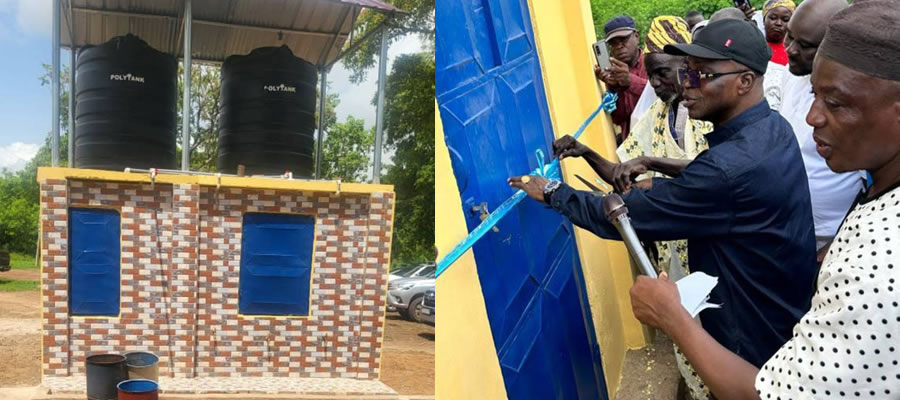
He assured residents that the Assembly was taking steps to formalise and enforce the by-laws to ensure that all new buildings are provided with Water, Sanitation and Hygiene (WASH) facilities.
Mr Azindoo also highlighted access to potable water as another pressing challenge, especially during the dry season when many surface water sources dry up, forcing residents to travel long distances in search of water.
The Mion District, which was carved out of the former Yendi Municipal Assembly in 2012 under Legislative Instrument 2064, is located in the eastern corridor of the Northern Region. It shares boundaries with Yendi Municipal to the east, Tamale Metropolitan and Savelugu Municipality to the west, Gushegu and Karaga municipalities to the north, and Nanumba North District and East Gonja Municipality to the south.


Local Gov Ministry
Int of Local Gov Studies
Ministry of Information
Local Gov Service
Ghana MPs
Ghana Hospitals
NALAG
 facebook
 X
X
 Youtube
 instagram
 whatsapp
 +233 593 831 280
+233 20 230 9497
+233 593 831 280
+233 20 230 9497 0800 430 430
 GPS: GE-231-4383
 info@ghanadistricts.com
 Box GP1044, Accra, Ghana